
The Story
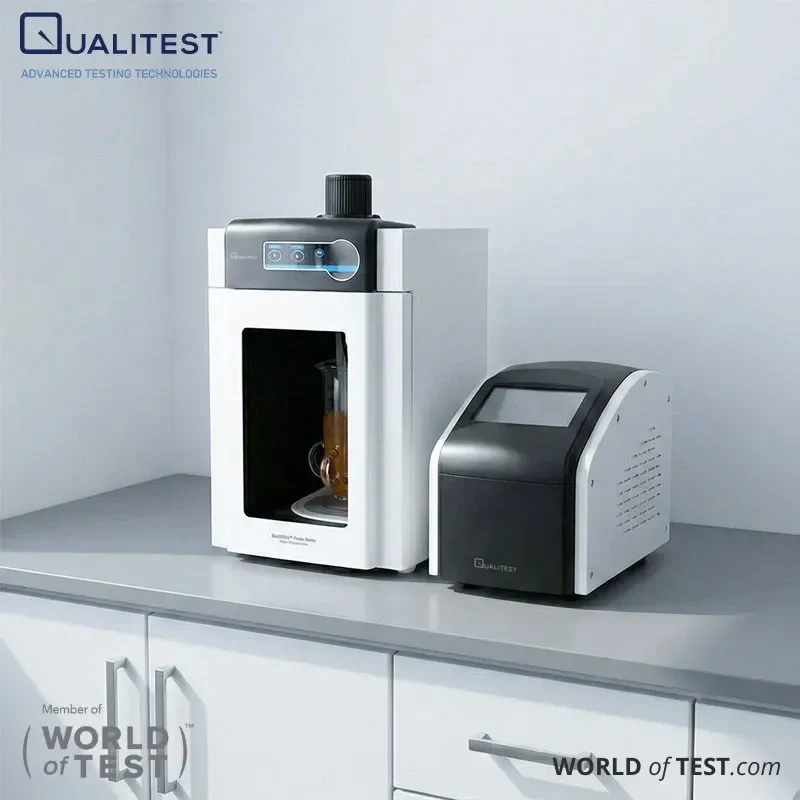
Smart Probe Ultrasonicator – QualiUltra™ Smart Series
The QualiUltra™ Smart Series Probe Ultrasonicator delivers high-intensity ultrasonic cavitation for efficient cell lysis, tissue disruption, and uniform liquid homogenization with precise energy regulation. Advanced smart control capabilities ensure steady operation through automatic frequency tracking, impedance matching, and integrated safeguards against overload and excessive temperature.
This series is developed for laboratories that require highly repeatable protocols, secure parameter storage, and streamlined operating procedures. A noise-reducing enclosure combined with automated probe lifting and system enhancements supports safer handling during processing while maintaining a clean and organized workspace.
The QualiUltra™ Smart Series provides a scalable Probe Ultrasonicator platform suitable for both small and large sample volumes. Output power is adjustable across models, with a standard operating range of 20–25 kHz to maintain consistent cavitation performance. Built-in time and temperature regulation helps preserve method accuracy during routine workflows.
A smart control architecture ensures stable and reliable operation, featuring automatic frequency tracking, system diagnostics, alert functions, and protected program storage. Connectivity options enable integration with a main unit computer for centralized control and remote printing support within lab networks.
Smart Probe Ultrasonicator – QualiUltra™ Smart Series Applications
Cell lysis and biomolecule extraction
Ultrasonic cavitation disrupts cell membranes to support extraction of DNA, RNA, and proteins. It is widely used in sample preparation involving bacteria, viruses, and spores where strong mechanical disruption is required.
DNA/RNA fragmentation and size control
Precisely managed sonication reduces nucleic acid fragment length for workflows requiring defined size ranges. Adjustable pulse modes and processing duration allow fine control of energy input while limiting excessive heat generation.
Chromatin immunoprecipitation (ChIP) preparation
Probe-based ultrasonication supports chromatin fragmentation steps used in ChIP workflows. Consistent energy delivery improves reproducibility, while temperature monitoring and safety functions help maintain stable processing conditions during extended runs.
Nanomaterial dispersion and deagglomeration
The system facilitates dispersion and breakup of clustered nanomaterials such as carbon nanotubes and graphene, producing more uniform suspensions. This improves reliability in materials research, chemical studies, and formulation development.
Emulsification and homogenization processes
High-intensity cavitation supports emulsification, homogenization, and particle size reduction in chemical and formulation applications. Stable power output and consistent frequency behavior enhance method repeatability.
Soil, rock, and particulate sample preparation
Probe ultrasonication assists in homogenizing soil, rock, and particulate samples for analytical workflows where uniform dispersion is required. It is also used across geological, marine, environmental, and biomedical sample preparation applications.
Compliance Standards
- IEC 61010-1 — Safety requirements for electrical equipment used in measurement, control, and laboratory environments, ensuring protection against electrical, mechanical, and thermal hazards.
- IEC 61326-1 — Electromagnetic compatibility (EMC) standard covering emission limits and immunity performance for laboratory and analytical instruments, supporting stable operation in controlled environments.
- ISO 20427 — Standardized methodology for ultrasonic dispersion procedures using probe-type sonication systems, providing guidance for consistent and reproducible processing results.
Smart Probe Ultrasonicator – QualiUltra™ Smart Series Key Features
Smart control architecture for stable output
A microcontroller-based system using DSP + ARM processing is described to support steady operation, precise control, and reliable data handling during ultrasonic processing.
Automatic frequency tracking and impedance matching
Real-time frequency adjustment and impedance adaptation help maintain consistent cavitation performance even when sample conditions change.
Pulse and continuous operation for thermal control
Multiple operating modes, including pulse and continuous sonication, allow users to manage energy input and reduce temperature rise in sensitive samples.
Large touch display with real-time parameter view
A 7-inch TFT touchscreen provides clear access to key settings such as temperature, power/amplitude, and pulse configuration, enabling direct on-screen control.
Secure method storage for reproducible workflows
Up to 20 method profiles can be saved, with password-based access control to support standardized and secure laboratory operation.
Built-in diagnostics and protection systems
Self-check functions and safety alerts help monitor system status, with protections for overload and excessive temperature clearly indicated during operation.
Connectivity for laboratory integration
RJ-45 and wireless communication options support main unit system connectivity, enabling centralized control and remote printing within lab networks.
Sound-reducing enclosure with integrated handling features
An enclosed chamber design includes illumination, sterilization function, automatic probe lifting, and door-lock safety features to support controlled and organized operation.
Theory and Method
Probe-based ultrasonic systems produce alternating pressure waves in liquid media, leading to the formation of cavitation bubbles. The collapse of these bubbles generates localized shear forces and micro-jets that facilitate cell disruption, particle dispersion, and enhanced mixing efficiency. Consistent performance is achieved through stable energy delivery, supported by automatic frequency tracking and impedance matching to maintain uniform cavitation behavior.
A standard workflow begins with selecting an appropriate probe tip size based on sample volume and viscosity. Next, define processing parameters such as target power level, pulse or continuous operation mode, and total processing duration. Temperature should be monitored throughout the cycle to avoid thermal impact on sensitive materials. For temperature-sensitive applications, a cooling system or ice bath can be used to maintain tighter thermal control. After completion, the probe should be cleaned thoroughly, and the optimized settings can be saved as a method to ensure consistent repetition in future runs.
Smart Probe Ultrasonicator – QualiUltra™ Smart Series Technical Specification
| Specification | QualiUltra™ Smart 650 | QualiUltra™ Smart 950 | QualiUltra™ Smart 1200 |
|---|---|---|---|
| Power range (adjustable) | 5–650 W | 5–950 W | 5–1200 W |
| Frequency | 20–25 kHz | ||
| Processing volume | 0.2–500 mL | ||
| Time range | 0–999 min | ||
| Temperature control | 0–100°C | ||
| Alerts | Temperature, time, failure | ||
| Soundproof box | Internal electric lifting device | ||
| Soundproof box size | 350 × 345 × 545 mm | ||
| Standard probe (horn) | Ø6 mm | Ø6 mm | Ø20 mm |
| Optional probe tips | Ø2, Ø3, Ø10, Ø12 mm | Ø2, Ø3, Ø10, Ø12, Ø15 mm | Ø15, Ø25 mm |
| Optional cooling cup | 30 mL, 100 mL, 400 mL | 30 mL, 100 mL, 400 mL | 100 mL, 400 mL |
| Standard configuration | Main Unit + transducer + probe + software | ||
Description
Smart Probe Ultrasonicator – QualiUltra™ Smart Series
The QualiUltra™ Smart Series Probe Ultrasonicator delivers high-intensity ultrasonic cavitation for efficient cell lysis, tissue disruption, and uniform liquid homogenization with precise energy regulation. Advanced smart control capabilities ensure steady operation through automatic frequency tracking, impedance matching, and integrated safeguards against overload and excessive temperature.
This series is developed for laboratories that require highly repeatable protocols, secure parameter storage, and streamlined operating procedures. A noise-reducing enclosure combined with automated probe lifting and system enhancements supports safer handling during processing while maintaining a clean and organized workspace.
The QualiUltra™ Smart Series provides a scalable Probe Ultrasonicator platform suitable for both small and large sample volumes. Output power is adjustable across models, with a standard operating range of 20–25 kHz to maintain consistent cavitation performance. Built-in time and temperature regulation helps preserve method accuracy during routine workflows.
A smart control architecture ensures stable and reliable operation, featuring automatic frequency tracking, system diagnostics, alert functions, and protected program storage. Connectivity options enable integration with a main unit computer for centralized control and remote printing support within lab networks.
Smart Probe Ultrasonicator – QualiUltra™ Smart Series Applications
Cell lysis and biomolecule extraction
Ultrasonic cavitation disrupts cell membranes to support extraction of DNA, RNA, and proteins. It is widely used in sample preparation involving bacteria, viruses, and spores where strong mechanical disruption is required.
DNA/RNA fragmentation and size control
Precisely managed sonication reduces nucleic acid fragment length for workflows requiring defined size ranges. Adjustable pulse modes and processing duration allow fine control of energy input while limiting excessive heat generation.
Chromatin immunoprecipitation (ChIP) preparation
Probe-based ultrasonication supports chromatin fragmentation steps used in ChIP workflows. Consistent energy delivery improves reproducibility, while temperature monitoring and safety functions help maintain stable processing conditions during extended runs.
Nanomaterial dispersion and deagglomeration
The system facilitates dispersion and breakup of clustered nanomaterials such as carbon nanotubes and graphene, producing more uniform suspensions. This improves reliability in materials research, chemical studies, and formulation development.
Emulsification and homogenization processes
High-intensity cavitation supports emulsification, homogenization, and particle size reduction in chemical and formulation applications. Stable power output and consistent frequency behavior enhance method repeatability.
Soil, rock, and particulate sample preparation
Probe ultrasonication assists in homogenizing soil, rock, and particulate samples for analytical workflows where uniform dispersion is required. It is also used across geological, marine, environmental, and biomedical sample preparation applications.
Compliance Standards
- IEC 61010-1 — Safety requirements for electrical equipment used in measurement, control, and laboratory environments, ensuring protection against electrical, mechanical, and thermal hazards.
- IEC 61326-1 — Electromagnetic compatibility (EMC) standard covering emission limits and immunity performance for laboratory and analytical instruments, supporting stable operation in controlled environments.
- ISO 20427 — Standardized methodology for ultrasonic dispersion procedures using probe-type sonication systems, providing guidance for consistent and reproducible processing results.
Smart Probe Ultrasonicator – QualiUltra™ Smart Series Key Features
Smart control architecture for stable output
A microcontroller-based system using DSP + ARM processing is described to support steady operation, precise control, and reliable data handling during ultrasonic processing.
Automatic frequency tracking and impedance matching
Real-time frequency adjustment and impedance adaptation help maintain consistent cavitation performance even when sample conditions change.
Pulse and continuous operation for thermal control
Multiple operating modes, including pulse and continuous sonication, allow users to manage energy input and reduce temperature rise in sensitive samples.
Large touch display with real-time parameter view
A 7-inch TFT touchscreen provides clear access to key settings such as temperature, power/amplitude, and pulse configuration, enabling direct on-screen control.
Secure method storage for reproducible workflows
Up to 20 method profiles can be saved, with password-based access control to support standardized and secure laboratory operation.
Built-in diagnostics and protection systems
Self-check functions and safety alerts help monitor system status, with protections for overload and excessive temperature clearly indicated during operation.
Connectivity for laboratory integration
RJ-45 and wireless communication options support main unit system connectivity, enabling centralized control and remote printing within lab networks.
Sound-reducing enclosure with integrated handling features
An enclosed chamber design includes illumination, sterilization function, automatic probe lifting, and door-lock safety features to support controlled and organized operation.
Theory and Method
Probe-based ultrasonic systems produce alternating pressure waves in liquid media, leading to the formation of cavitation bubbles. The collapse of these bubbles generates localized shear forces and micro-jets that facilitate cell disruption, particle dispersion, and enhanced mixing efficiency. Consistent performance is achieved through stable energy delivery, supported by automatic frequency tracking and impedance matching to maintain uniform cavitation behavior.
A standard workflow begins with selecting an appropriate probe tip size based on sample volume and viscosity. Next, define processing parameters such as target power level, pulse or continuous operation mode, and total processing duration. Temperature should be monitored throughout the cycle to avoid thermal impact on sensitive materials. For temperature-sensitive applications, a cooling system or ice bath can be used to maintain tighter thermal control. After completion, the probe should be cleaned thoroughly, and the optimized settings can be saved as a method to ensure consistent repetition in future runs.
Smart Probe Ultrasonicator – QualiUltra™ Smart Series Technical Specification
| Specification | QualiUltra™ Smart 650 | QualiUltra™ Smart 950 | QualiUltra™ Smart 1200 |
|---|---|---|---|
| Power range (adjustable) | 5–650 W | 5–950 W | 5–1200 W |
| Frequency | 20–25 kHz | ||
| Processing volume | 0.2–500 mL | ||
| Time range | 0–999 min | ||
| Temperature control | 0–100°C | ||
| Alerts | Temperature, time, failure | ||
| Soundproof box | Internal electric lifting device | ||
| Soundproof box size | 350 × 345 × 545 mm | ||
| Standard probe (horn) | Ø6 mm | Ø6 mm | Ø20 mm |
| Optional probe tips | Ø2, Ø3, Ø10, Ø12 mm | Ø2, Ø3, Ø10, Ø12, Ø15 mm | Ø15, Ø25 mm |
| Optional cooling cup | 30 mL, 100 mL, 400 mL | 30 mL, 100 mL, 400 mL | 100 mL, 400 mL |
| Standard configuration | Main Unit + transducer + probe + software | ||