
The Story
Gel Strength & Bloom Tester – QualiGST™-50 | Precision Gel Analysis System
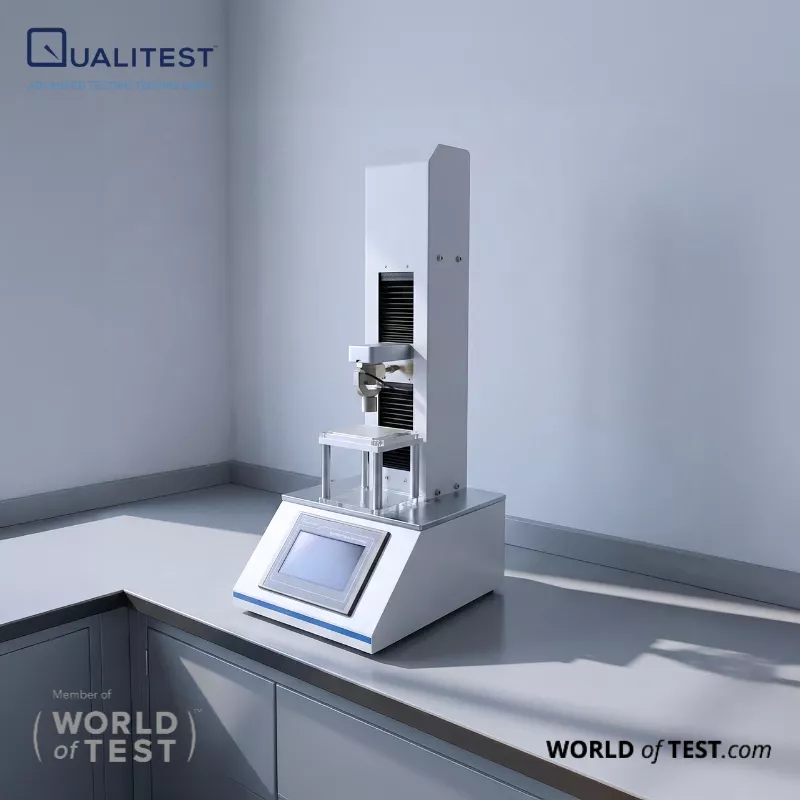
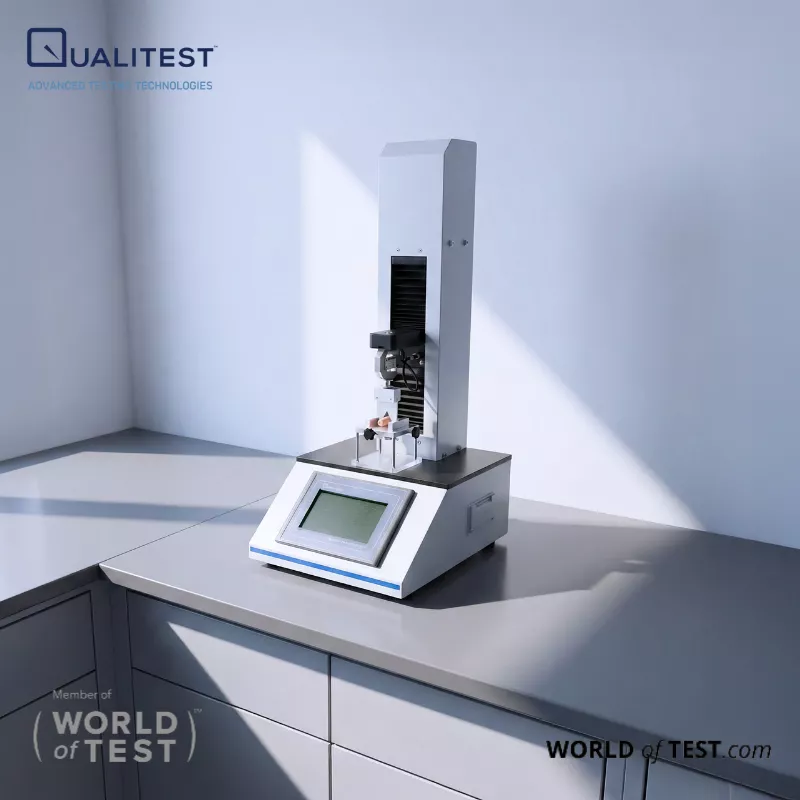
The Gel Strength & Bloom Tester – QualiGST™-50 is a high-precision analytical instrument designed to determine gel strength and Bloom value in gelatin and other gel-based materials. It measures mechanical resistance, firmness, and structural stability by applying a controlled compressive force through a standardized probe.
Built for reliable quality control and product development workflows, the QualiGST™-50 delivers consistent and repeatable test results using advanced force measurement technology combined with precise displacement control. Its stable testing performance supports accurate evaluation of gel texture and behavior.
This system is widely used in food, pharmaceutical, cosmetic, and research laboratories where accurate gel characterization is essential for maintaining product quality, formulation consistency, and regulatory compliance.
Gel Strength & Bloom Tester – QualiGST™-50 | Application Areas
The QualiGST™-50 Gel Strength & Bloom Tester is widely utilized for texture evaluation and structural integrity analysis across multiple industries:
Food Industry
Used for measuring gel strength and Bloom value in gelatin, surimi, imitation seafood, desserts, and other gel-based food products. It helps maintain consistent texture, firmness, and overall sensory quality to support consumer satisfaction.
Pharmaceutical Industry
Applied in the assessment of hydrogels, softgel capsules, tablet coatings, and wound care dressings. It ensures reliable gel consistency that supports accurate performance, controlled release behavior, and dosage stability.
Cosmetics & Personal Care
Used for evaluating gel-based creams, serums, and cosmetic formulations. It helps maintain uniform texture, smooth application, and product stability throughout shelf life.

Gel Strength & Bloom Tester – QualiGST™-50 Key Features
Multi-Mode Gel Texture Testing
Supports fixed deformation testing, fixed load (weight-based) testing, peak force (rupture) analysis, and standardized Bloom g measurement on a single integrated platform.
Bloom Value Measurement
Performs Bloom strength testing using a 4 mm deformation with a Ø12.7 mm probe, delivering results in grams for accurate gel strength evaluation.
High-Precision Motion Control
PLC-based motor system with a precision ball-lead screw ensures stable motion control and displacement accuracy up to ±0.01 mm.
Wide Adjustable Test Parameters
Test speed adjustable from 1 to 100 mm/min with a configurable force range up to 50 N, supporting diverse testing requirements.
Flexible Probe & Fixture Options
Supports interchangeable probes including Ø5 mm, Ø10 mm, Ø12.7 mm, and custom designs to accommodate different gel types and industry standards.
User-Friendly Touchscreen Interface
7-inch HMI touchscreen offers guided navigation, real-time force–displacement curves, and straightforward parameter configuration.
Integrated Data Output
Built-in microprinter enables instant test report generation, while optional RS-232 connectivity allows data transfer to external systems.
Safety & Reliability Design
Includes travel-limit protection, overload protection, automatic return function, and guarded load cell system for safe operation and long service life.

Front View

Test Report
Theory of Gel Strength Testing
A Gel Strength Tester evaluates the mechanical resistance of a gel network when it is subjected to controlled compression or penetration. Gel strength reflects the internal structure, elasticity, and resistance to deformation of a material, which directly affects texture, stability, and functional performance in food, pharmaceutical, and cosmetic formulations.
In quantitative terms, gel strength describes the relationship between applied force and the resulting deformation. It is commonly expressed as force (g or N) or force × distance (g·cm). A stronger gel structure resists deformation for a longer period and requires higher force to reach rupture, while weaker gels deform or break under lower force levels.
Theory of Bloom Testing
A Bloom Tester evaluates gel firmness using a standardized penetration method, typically a 4 mm indentation with a 12.7 mm diameter cylindrical probe. The force required to achieve this fixed deformation is recorded as the Bloom value (Bloom g), which serves as a widely recognized reference for gelatin and hydrocolloid quality.
Bloom testing provides a consistent and comparable measurement for gel consistency, batch uniformity, and compliance with industry requirements. It is especially important in gelatin production, confectionery applications, and surimi-based products where texture precision is critical.
Test Methods in QualiGST™-50
The Gel Strength & Bloom Tester – QualiGST™-50 supports multiple standardized test modes to evaluate different material behaviors and mechanical responses:
Fixed Deformation Method
The probe compresses the gel to a defined distance at a controlled speed while measuring the required force.
Used for:
- Gel hardness evaluation
- Deformation resistance analysis
- Bloom g measurement (4 mm indentation standard)
Fixed Load (Weight) Method
A constant force is applied to the sample, and the resulting deformation is measured over time.
Used for:
Structural stability assessment under sustained load
Evaluation of long-term gel behavior
Material consistency analysis
Peak (Rupture) Test Method
The probe continues penetration until gel failure occurs, capturing the maximum force at rupture.
Used for:
- Puncture resistance measurement
- Elastic limit determination
- Structural integrity analysis of gels
Gel Strength (g·cm) Measurement
Gel strength is calculated using the relationship:
Gel Strength = Force (g) × Distance (cm)
Gel Strength=F×d
This calculation provides a combined evaluation of firmness and elasticity, offering a more complete mechanical profile than force alone.
Measurement Control and Accuracy
The QualiGST™-50 uses a PLC-controlled drive system combined with a precision ball-lead screw mechanism to maintain stable test motion and high positional accuracy up to ±0.01 mm. Controlled probe movement, repeatable loading conditions, and automatic return functionality help maintain consistent results across repeated testing cycles and different operators.
Gel Strength & Bloom Tester – QualiGST™-50 Technical Specifications
| Parameter | Specification |
|---|---|
| Model | QualiGST™-50 |
| Test Items |
|
| Test Force Range | 0 – 50 N (customizable) |
| Stroke | 110 mm (without probe) |
| Test Speed | 1 – 100 mm/min (adjustable) |
| Displacement Accuracy | ±0.01 mm |
| Display | 7 inches HMI touchscreen |
| Control System | PLC control with HMI touchscreen |
| Testing Modes | Fixed deformation, Bloom test, fixed load, peak force |
| Bloom Test Method | 4 mm deformation with Ø12.7 mm probe |
| Gel Strength Calculation | Force (g) × Distance (cm) = g·cm |
| Probes | Ø5 mm, Ø10 mm, Ø12.7 mm, custom |
| Data Output | Embedded microprinter; optional RS-232 |
| Packaging Dimension | 510 x 360 x 500 mm |
| Voltage | AC 110–220 V, 50/60 Hz |
| Safety Features | Limit switches, overload protection, auto-return |
Description
Gel Strength & Bloom Tester – QualiGST™-50 | Precision Gel Analysis System
The Gel Strength & Bloom Tester – QualiGST™-50 is a high-precision analytical instrument designed to determine gel strength and Bloom value in gelatin and other gel-based materials. It measures mechanical resistance, firmness, and structural stability by applying a controlled compressive force through a standardized probe.
Built for reliable quality control and product development workflows, the QualiGST™-50 delivers consistent and repeatable test results using advanced force measurement technology combined with precise displacement control. Its stable testing performance supports accurate evaluation of gel texture and behavior.
This system is widely used in food, pharmaceutical, cosmetic, and research laboratories where accurate gel characterization is essential for maintaining product quality, formulation consistency, and regulatory compliance.
Gel Strength & Bloom Tester – QualiGST™-50 | Application Areas
The QualiGST™-50 Gel Strength & Bloom Tester is widely utilized for texture evaluation and structural integrity analysis across multiple industries:
Food Industry
Used for measuring gel strength and Bloom value in gelatin, surimi, imitation seafood, desserts, and other gel-based food products. It helps maintain consistent texture, firmness, and overall sensory quality to support consumer satisfaction.
Pharmaceutical Industry
Applied in the assessment of hydrogels, softgel capsules, tablet coatings, and wound care dressings. It ensures reliable gel consistency that supports accurate performance, controlled release behavior, and dosage stability.
Cosmetics & Personal Care
Used for evaluating gel-based creams, serums, and cosmetic formulations. It helps maintain uniform texture, smooth application, and product stability throughout shelf life.
Gel Strength & Bloom Tester – QualiGST™-50 Key Features
Multi-Mode Gel Texture Testing
Supports fixed deformation testing, fixed load (weight-based) testing, peak force (rupture) analysis, and standardized Bloom g measurement on a single integrated platform.
Bloom Value Measurement
Performs Bloom strength testing using a 4 mm deformation with a Ø12.7 mm probe, delivering results in grams for accurate gel strength evaluation.
High-Precision Motion Control
PLC-based motor system with a precision ball-lead screw ensures stable motion control and displacement accuracy up to ±0.01 mm.
Wide Adjustable Test Parameters
Test speed adjustable from 1 to 100 mm/min with a configurable force range up to 50 N, supporting diverse testing requirements.
Flexible Probe & Fixture Options
Supports interchangeable probes including Ø5 mm, Ø10 mm, Ø12.7 mm, and custom designs to accommodate different gel types and industry standards.
User-Friendly Touchscreen Interface
7-inch HMI touchscreen offers guided navigation, real-time force–displacement curves, and straightforward parameter configuration.
Integrated Data Output
Built-in microprinter enables instant test report generation, while optional RS-232 connectivity allows data transfer to external systems.
Safety & Reliability Design
Includes travel-limit protection, overload protection, automatic return function, and guarded load cell system for safe operation and long service life.
Front View
Test Report
Theory of Gel Strength Testing
A Gel Strength Tester evaluates the mechanical resistance of a gel network when it is subjected to controlled compression or penetration. Gel strength reflects the internal structure, elasticity, and resistance to deformation of a material, which directly affects texture, stability, and functional performance in food, pharmaceutical, and cosmetic formulations.
In quantitative terms, gel strength describes the relationship between applied force and the resulting deformation. It is commonly expressed as force (g or N) or force × distance (g·cm). A stronger gel structure resists deformation for a longer period and requires higher force to reach rupture, while weaker gels deform or break under lower force levels.
Theory of Bloom Testing
A Bloom Tester evaluates gel firmness using a standardized penetration method, typically a 4 mm indentation with a 12.7 mm diameter cylindrical probe. The force required to achieve this fixed deformation is recorded as the Bloom value (Bloom g), which serves as a widely recognized reference for gelatin and hydrocolloid quality.
Bloom testing provides a consistent and comparable measurement for gel consistency, batch uniformity, and compliance with industry requirements. It is especially important in gelatin production, confectionery applications, and surimi-based products where texture precision is critical.
Test Methods in QualiGST™-50
The Gel Strength & Bloom Tester – QualiGST™-50 supports multiple standardized test modes to evaluate different material behaviors and mechanical responses:
Fixed Deformation Method
The probe compresses the gel to a defined distance at a controlled speed while measuring the required force.
Used for:
- Gel hardness evaluation
- Deformation resistance analysis
- Bloom g measurement (4 mm indentation standard)
Fixed Load (Weight) Method
A constant force is applied to the sample, and the resulting deformation is measured over time.
Used for:
Structural stability assessment under sustained load
Evaluation of long-term gel behavior
Material consistency analysis
Peak (Rupture) Test Method
The probe continues penetration until gel failure occurs, capturing the maximum force at rupture.
Used for:
- Puncture resistance measurement
- Elastic limit determination
- Structural integrity analysis of gels
Gel Strength (g·cm) Measurement
Gel strength is calculated using the relationship:
Gel Strength = Force (g) × Distance (cm)
Gel Strength=F×d
This calculation provides a combined evaluation of firmness and elasticity, offering a more complete mechanical profile than force alone.
Measurement Control and Accuracy
The QualiGST™-50 uses a PLC-controlled drive system combined with a precision ball-lead screw mechanism to maintain stable test motion and high positional accuracy up to ±0.01 mm. Controlled probe movement, repeatable loading conditions, and automatic return functionality help maintain consistent results across repeated testing cycles and different operators.
Gel Strength & Bloom Tester – QualiGST™-50 Technical Specifications
| Parameter | Specification |
|---|---|
| Model | QualiGST™-50 |
| Test Items |
|
| Test Force Range | 0 – 50 N (customizable) |
| Stroke | 110 mm (without probe) |
| Test Speed | 1 – 100 mm/min (adjustable) |
| Displacement Accuracy | ±0.01 mm |
| Display | 7 inches HMI touchscreen |
| Control System | PLC control with HMI touchscreen |
| Testing Modes | Fixed deformation, Bloom test, fixed load, peak force |
| Bloom Test Method | 4 mm deformation with Ø12.7 mm probe |
| Gel Strength Calculation | Force (g) × Distance (cm) = g·cm |
| Probes | Ø5 mm, Ø10 mm, Ø12.7 mm, custom |
| Data Output | Embedded microprinter; optional RS-232 |
| Packaging Dimension | 510 x 360 x 500 mm |
| Voltage | AC 110–220 V, 50/60 Hz |
| Safety Features | Limit switches, overload protection, auto-return |