The Story
Industrial Ultrasonic Graphene Processing System – QualiUltra™ Graph Series
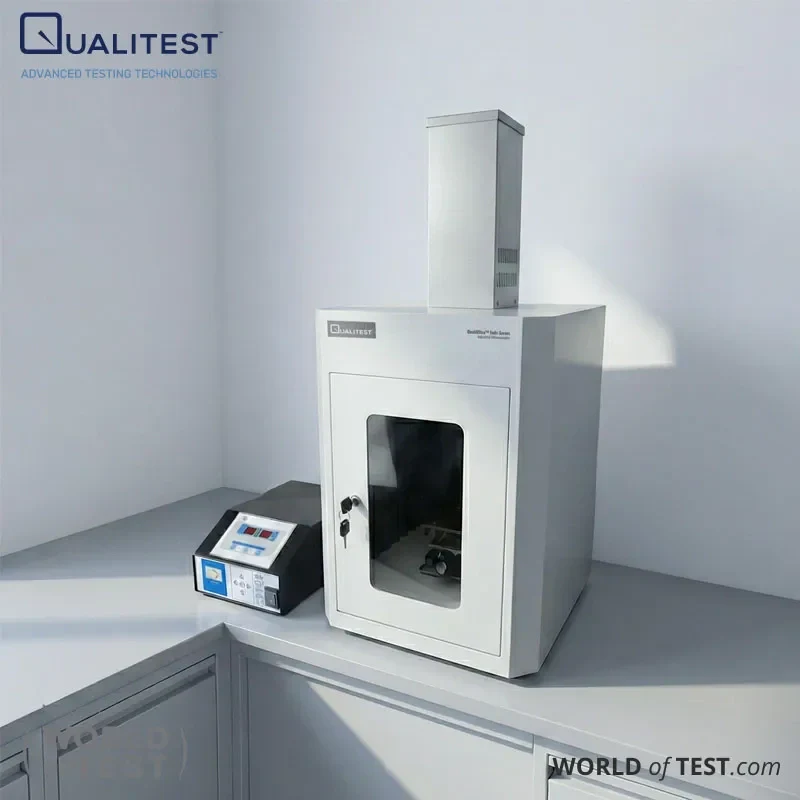
The QualiUltra™ Graph Series ultrasonic graphene processing system is developed for large-scale dispersion and exfoliation applications in graphene production workflows. It is engineered with an automated control structure and a modular core setup that includes an ultrasonic generator paired with a transducer assembly. The system accommodates batch volumes ranging from 10 to 50 liters (maximum), suitable for liquid media such as aqueous or organic solutions with concentrations below 20%.
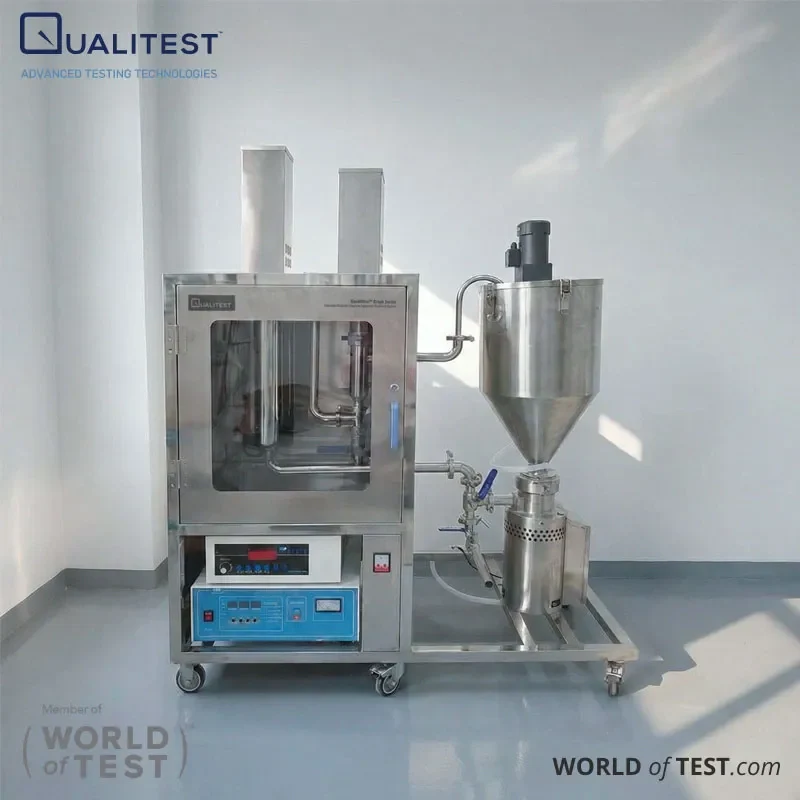
Designed for extended processing cycles, the QualiUltra™ Graph Series integrates a dedicated cooling and mixing tank along with an industrial-grade framework to maintain stable operating conditions throughout long runs. The process is based on ultrasonic cavitation-driven “peeling,” which supports efficient exfoliation and dispersion within dense liquid phases, improving consistency in material processing.
This industrial ultrasonic platform is intended for graphene dispersion and graphene oxide exfoliation tasks that extend beyond laboratory-scale sonicators. It features a stainless-steel processing tank combined with a separate cooling/mixing system to support controlled batch preparation. The setup can be configured for standalone operation or multi-unit inline systems depending on production requirements. Adjustable control parameters such as processing time and operational monitoring enable consistent, repeatable production cycles suited for scaled material processing.
Industrial Ultrasonic Graphene Processing System – QualiUltra™ Graph Series Applications
Graphene and Graphene Oxide Dispersion
Ultrasonic cavitation assists in separating stacked graphene layers, improving dispersion stability and uniform distribution in liquid media. This enables the preparation of consistent dispersions used in coatings, polymer composites, and conductive material formulations.
Carbon Nanotube Dispersion and Homogenization
High-intensity ultrasonic energy reduces soft agglomerates and enhances wetting behavior in both aqueous and organic systems. Improved dispersion quality supports more reliable downstream processes such as mixing, pumping, and coating or deposition operations.
Emulsification and Slurry Conditioning
The combination of ultrasonic energy and controlled mixing enhances emulsification and homogenization where droplet size distribution and particle uniformity are critical. This is particularly beneficial for pilot-scale batches requiring tighter process control compared to conventional mechanical stirring.
Granular Material Disintegration and Fragmentation in Liquid Media
Ultrasonic processing supports breakdown and uniform suspension of granular slurries, including soil samples, rock fragments, non-ferrous metal powders, and rare-earth related materials. This improves particle distribution consistency for analytical preparation, separation processes, and further material treatment workflows.
Standards Compliance
IEC 61010-1
Safety requirements for electrical equipment used in measurement, control, and laboratory environments, ensuring safe operation under defined electrical and mechanical conditions.
IEC 61326-1
Electromagnetic compatibility (EMC) standard for equipment used in laboratory, measurement, and control applications, supporting reliable performance in typical industrial and lab electromagnetic conditions.
ISO 20427:2023
Guideline for ultrasonic dispersion procedures, supporting structured documentation and method consistency in sonication-based dispersion and processing workflows.
Industrial Ultrasonic Graphene Processing System – QualiUltra™ Graph Series Key Features
Industrial batch capacity for graphene processing
Designed to handle single-batch volumes ranging from 10 to 50 liters (maximum), suitable for liquid-based graphene and graphene oxide processing systems.
Automated control with modular ultrasonic core design
Features a modular architecture consisting of a separate ultrasonic generator and transducer assembly, supporting easier maintenance and flexible system configuration.
Integrated cooling and mixing tank system
Equipped with a 50-liter cooling and mixing tank to help maintain stable thermal conditions and consistent processing behavior during extended operation cycles.
Optimized for graphene dispersion and exfoliation workflows
Engineered for ultrasonic peeling, dispersion, and exfoliation processes commonly used in the preparation of graphene and graphene oxide materials.
Industrial-grade power and processing capability
Operates on an AC220V/50Hz power supply with a total output of 3000 W, supporting continuous, production-level processing requirements in industrial environments.
Theory and Method
This ultrasonic processing system operates on the principle of cavitation generated by high-intensity ultrasound in liquid media. Alternating pressure waves produce microscopic bubbles that rapidly collapse, creating localized shear forces and micro-jetting effects near particle surfaces. This mechanical activity promotes exfoliation (“peeling”) of layered materials and enhances dispersion performance in graphene-based slurries.
During cavitation, extremely short-lived high-pressure zones and localized energy concentrations form, contributing to efficient separation of stacked sheets and improved uniformity in particle distribution. These effects are particularly relevant for processing graphene and graphene oxide systems where controlled layer separation is required.
A typical process workflow begins with preparing a liquid batch within the recommended concentration range. The material is then subjected to ultrasonic treatment for a defined processing time under controlled parameters. Integrated cooling and mixing functions help maintain stable operating conditions during extended cycles, especially when dealing with higher viscosity or increased solid content.
After ultrasonic processing, the resulting dispersion can be directed toward further steps such as filtration, centrifugation, or downstream blending, depending on the final application requirements and product formulation goals.
Industrial Ultrasonic Graphene Equipment Treatment System – QualiUltra™ Graph Series Technical Specification
| Specification | QualiUltra™ Graph CSCB-2GL |
|---|---|
| Single processing capacity | 10–50 L (max) |
| Material properties | Liquid, aqueous or organic solution; concentration <20% |
| Cooling/mixing tank volume | 50 L |
| Overall dimensions (L × W × H) | 1230 × 600 × 1550 mm |
| Voltage | AC220V / 50 Hz (110V is also available) |
| Total power | 3000 W |
| Working time setting | 1–99 min |
| Ultrasonic frequency | 15 kHz (components list includes 15 kHz assemblies; page also references 20 kHz assemblies) |
| Ultrasonic transducer power | 2400 W per group (15 kHz set shown) |
| Working tank material | 304 stainless steel (working tank body) |
Description
Industrial Ultrasonic Graphene Processing System – QualiUltra™ Graph Series
The QualiUltra™ Graph Series ultrasonic graphene processing system is developed for large-scale dispersion and exfoliation applications in graphene production workflows. It is engineered with an automated control structure and a modular core setup that includes an ultrasonic generator paired with a transducer assembly. The system accommodates batch volumes ranging from 10 to 50 liters (maximum), suitable for liquid media such as aqueous or organic solutions with concentrations below 20%.
Designed for extended processing cycles, the QualiUltra™ Graph Series integrates a dedicated cooling and mixing tank along with an industrial-grade framework to maintain stable operating conditions throughout long runs. The process is based on ultrasonic cavitation-driven “peeling,” which supports efficient exfoliation and dispersion within dense liquid phases, improving consistency in material processing.
This industrial ultrasonic platform is intended for graphene dispersion and graphene oxide exfoliation tasks that extend beyond laboratory-scale sonicators. It features a stainless-steel processing tank combined with a separate cooling/mixing system to support controlled batch preparation. The setup can be configured for standalone operation or multi-unit inline systems depending on production requirements. Adjustable control parameters such as processing time and operational monitoring enable consistent, repeatable production cycles suited for scaled material processing.
Industrial Ultrasonic Graphene Processing System – QualiUltra™ Graph Series Applications
Graphene and Graphene Oxide Dispersion
Ultrasonic cavitation assists in separating stacked graphene layers, improving dispersion stability and uniform distribution in liquid media. This enables the preparation of consistent dispersions used in coatings, polymer composites, and conductive material formulations.
Carbon Nanotube Dispersion and Homogenization
High-intensity ultrasonic energy reduces soft agglomerates and enhances wetting behavior in both aqueous and organic systems. Improved dispersion quality supports more reliable downstream processes such as mixing, pumping, and coating or deposition operations.
Emulsification and Slurry Conditioning
The combination of ultrasonic energy and controlled mixing enhances emulsification and homogenization where droplet size distribution and particle uniformity are critical. This is particularly beneficial for pilot-scale batches requiring tighter process control compared to conventional mechanical stirring.
Granular Material Disintegration and Fragmentation in Liquid Media
Ultrasonic processing supports breakdown and uniform suspension of granular slurries, including soil samples, rock fragments, non-ferrous metal powders, and rare-earth related materials. This improves particle distribution consistency for analytical preparation, separation processes, and further material treatment workflows.
Standards Compliance
IEC 61010-1
Safety requirements for electrical equipment used in measurement, control, and laboratory environments, ensuring safe operation under defined electrical and mechanical conditions.
IEC 61326-1
Electromagnetic compatibility (EMC) standard for equipment used in laboratory, measurement, and control applications, supporting reliable performance in typical industrial and lab electromagnetic conditions.
ISO 20427:2023
Guideline for ultrasonic dispersion procedures, supporting structured documentation and method consistency in sonication-based dispersion and processing workflows.
Industrial Ultrasonic Graphene Processing System – QualiUltra™ Graph Series Key Features
Industrial batch capacity for graphene processing
Designed to handle single-batch volumes ranging from 10 to 50 liters (maximum), suitable for liquid-based graphene and graphene oxide processing systems.
Automated control with modular ultrasonic core design
Features a modular architecture consisting of a separate ultrasonic generator and transducer assembly, supporting easier maintenance and flexible system configuration.
Integrated cooling and mixing tank system
Equipped with a 50-liter cooling and mixing tank to help maintain stable thermal conditions and consistent processing behavior during extended operation cycles.
Optimized for graphene dispersion and exfoliation workflows
Engineered for ultrasonic peeling, dispersion, and exfoliation processes commonly used in the preparation of graphene and graphene oxide materials.
Industrial-grade power and processing capability
Operates on an AC220V/50Hz power supply with a total output of 3000 W, supporting continuous, production-level processing requirements in industrial environments.
Theory and Method
This ultrasonic processing system operates on the principle of cavitation generated by high-intensity ultrasound in liquid media. Alternating pressure waves produce microscopic bubbles that rapidly collapse, creating localized shear forces and micro-jetting effects near particle surfaces. This mechanical activity promotes exfoliation (“peeling”) of layered materials and enhances dispersion performance in graphene-based slurries.
During cavitation, extremely short-lived high-pressure zones and localized energy concentrations form, contributing to efficient separation of stacked sheets and improved uniformity in particle distribution. These effects are particularly relevant for processing graphene and graphene oxide systems where controlled layer separation is required.
A typical process workflow begins with preparing a liquid batch within the recommended concentration range. The material is then subjected to ultrasonic treatment for a defined processing time under controlled parameters. Integrated cooling and mixing functions help maintain stable operating conditions during extended cycles, especially when dealing with higher viscosity or increased solid content.
After ultrasonic processing, the resulting dispersion can be directed toward further steps such as filtration, centrifugation, or downstream blending, depending on the final application requirements and product formulation goals.
Industrial Ultrasonic Graphene Equipment Treatment System – QualiUltra™ Graph Series Technical Specification
| Specification | QualiUltra™ Graph CSCB-2GL |
|---|---|
| Single processing capacity | 10–50 L (max) |
| Material properties | Liquid, aqueous or organic solution; concentration <20% |
| Cooling/mixing tank volume | 50 L |
| Overall dimensions (L × W × H) | 1230 × 600 × 1550 mm |
| Voltage | AC220V / 50 Hz (110V is also available) |
| Total power | 3000 W |
| Working time setting | 1–99 min |
| Ultrasonic frequency | 15 kHz (components list includes 15 kHz assemblies; page also references 20 kHz assemblies) |
| Ultrasonic transducer power | 2400 W per group (15 kHz set shown) |
| Working tank material | 304 stainless steel (working tank body) |