Original: $100.00
-65%$100.00
$35.00The Story
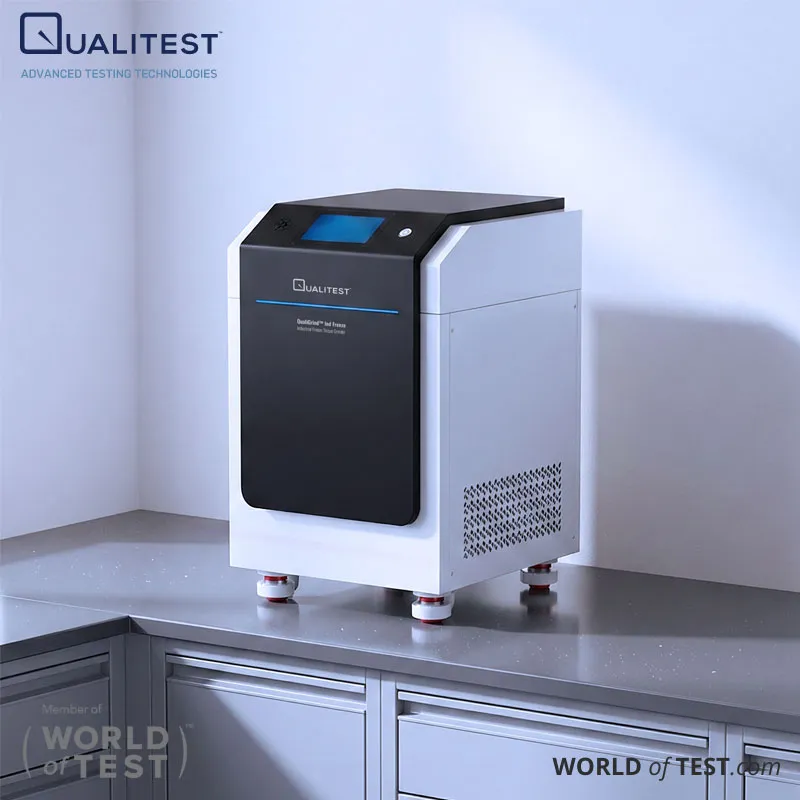
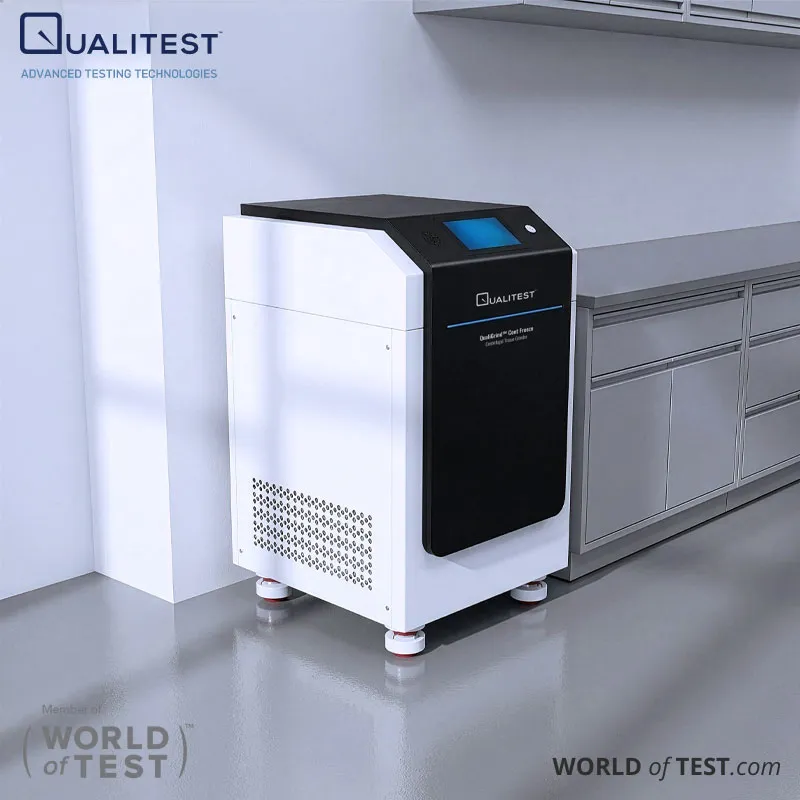
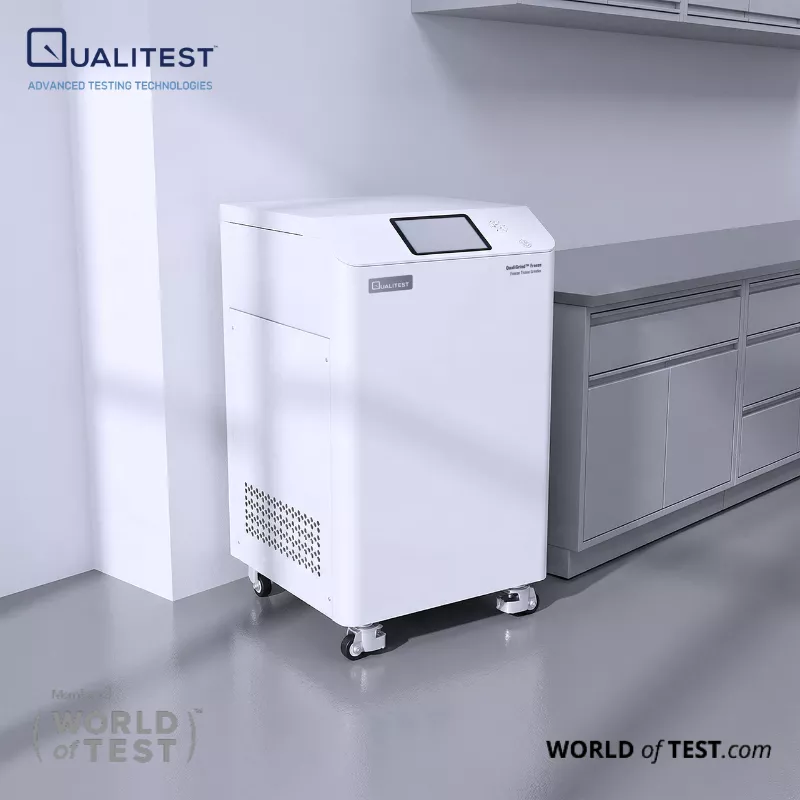
Freeze Tissue Grinder – QualiGrind™ Freeze
A Tissue Grinder needs to preserve sample integrity by preventing heat buildup during processing. The QualiGrind™ Freeze integrates high-throughput bead milling with a controlled cooling system, helping maintain low temperatures throughout disruption. This ensures temperature-sensitive tissues remain stable, supporting reliable extraction of nucleic acids, proteins, and other biomolecules with minimal degradation.
Built for modern laboratory workflows, the QualiGrind™ Freeze delivers fast, consistent, and efficient grinding performance in high-demand environments. It supports dry, wet, and mixed-mode homogenization, offering flexible processing options for different sample types. The system also helps standardize results by minimizing operator-to-operator variation, improving overall reproducibility in routine and advanced lab applications.
Freeze Tissue Grinder – QualiGrind™ Freeze Applications
DNA, RNA, and Protein Extraction Preparation
Cryogenic grinding helps maintain sample stability during mechanical disruption. This supports downstream extraction and purification workflows where consistency and reproducibility are critical for reliable results.
Plant and Animal Tissue Homogenization
Suitable for plant materials, animal tissues, and other complex biological samples that are difficult to process at ambient temperature. Cooling during grinding helps reduce sample smearing and improves overall homogenization quality.
Microorganisms and Tough Biological Matrices
Effective for processing bacteria, yeast, fungi, spores, and other resilient biological materials. Proper bead selection combined with low-temperature conditions enhances disruption of hard-to-lyse structures.
Heat-Sensitive and Rare Specimens
Low-temperature processing helps minimize thermal impact during bead milling, making it suitable for delicate or limited-availability samples where preserving integrity is essential.
Standards Compliance
-
IEC 61010-1
Safety standard for electrical equipment used in measurement, control, and laboratory environments. Ensures protection against electrical, mechanical, and thermal hazards during operation.
-
IEC 61326-1
Electromagnetic compatibility (EMC) standard defining immunity and emission limits for laboratory and analytical instruments. Ensures stable performance in typical lab electromagnetic conditions.
Freeze Tissue Grinder – QualiGrind™ Freeze Key Features
-
Refrigerated Grinding Workflow
Integrated cooling during bead milling helps maintain low temperatures, supporting the stability of heat-sensitive samples throughout the disruption process.
-
Flexible Grinding Modes
Supports wet, dry, and pre-freeze grinding approaches, allowing adaptation to different sample types and preparation requirements.
-
High-Throughput Adapter Options
Compatible with multiple tube formats and jar-style containers, enabling efficient batch processing for varied laboratory workloads.
-
Intuitive Touchscreen Interface
User-friendly control system designed for fast setup, precise parameter input, and consistent run configuration.
-
Post-Run Temperature Support
Insulated holding functionality helps maintain reduced temperature conditions after grinding cycles, improving sample handling stability.
-
Run Data Storage (Model-Dependent)
Stores operational parameters and run history to support consistent repetition of protocols and standardized laboratory workflows.
Theory and Method
The QualiGrind™ Freeze system operates using high-frequency vertical oscillation to generate controlled bead-to-sample collisions and shear forces within sealed tubes or adapter units. The repeated impact of beads disrupts tissue architecture and cell walls, producing a consistent and uniform homogenate suitable for downstream analytical workflows. Integrated refrigeration helps limit temperature increase during processing, supporting the stability of heat-sensitive biological materials.
A standard workflow involves selecting the appropriate adapter format and bead type according to sample characteristics. Speed and processing time are then adjusted based on tissue hardness and lysis requirements. For temperature-sensitive samples, short processing intervals combined with pause cycles can be applied to further control heat accumulation and maintain sample integrity.
Freeze Tissue Grinder – QualiGrind™ Freeze Technical Specification
| Parameter | QualiGrind™ Freeze 16 | QualiGrind™ Freeze 48 |
|---|---|---|
| Data storage | Stores 16 sets | Stores 48 sets |
| Rated power | 375 W | |
| Time setting | 1–9999 s | |
| Speed / frequency | 600–2100 rpm (20–70 Hz) | |
| Fixture travel | 34 mm (vertical) | |
| Sample capacity (standard) | Aluminum alloy adapter: 5 mL (12-well), 2 mL (24-well) | |
| Sample capacity (optional) | Aluminum alloy adapter: 2 mL (24-well); 5/10/15/25/50/100 mL grinding jars; freezing adapter | |
| Grinding method | Wet grinding, dry grinding, pre-freeze grinding | |
| Grinding beads | Ø3 mm stainless steel balls (1000 pcs) and Ø6 mm stainless steel balls (1000 pcs) | |
| Display | 7 inch TFT touchscreen | |
| Refrigeration temperature range | -30°C to 25°C | |
| Voice prompt function | No | |
| Post-grinding insulation | Yes | |
| Dimensions (L×W×H) | 465 × 520 × 840 mm | 465 × 520 × 840 mm |
Description
Freeze Tissue Grinder – QualiGrind™ Freeze
A Tissue Grinder needs to preserve sample integrity by preventing heat buildup during processing. The QualiGrind™ Freeze integrates high-throughput bead milling with a controlled cooling system, helping maintain low temperatures throughout disruption. This ensures temperature-sensitive tissues remain stable, supporting reliable extraction of nucleic acids, proteins, and other biomolecules with minimal degradation.
Built for modern laboratory workflows, the QualiGrind™ Freeze delivers fast, consistent, and efficient grinding performance in high-demand environments. It supports dry, wet, and mixed-mode homogenization, offering flexible processing options for different sample types. The system also helps standardize results by minimizing operator-to-operator variation, improving overall reproducibility in routine and advanced lab applications.
Freeze Tissue Grinder – QualiGrind™ Freeze Applications
DNA, RNA, and Protein Extraction Preparation
Cryogenic grinding helps maintain sample stability during mechanical disruption. This supports downstream extraction and purification workflows where consistency and reproducibility are critical for reliable results.
Plant and Animal Tissue Homogenization
Suitable for plant materials, animal tissues, and other complex biological samples that are difficult to process at ambient temperature. Cooling during grinding helps reduce sample smearing and improves overall homogenization quality.
Microorganisms and Tough Biological Matrices
Effective for processing bacteria, yeast, fungi, spores, and other resilient biological materials. Proper bead selection combined with low-temperature conditions enhances disruption of hard-to-lyse structures.
Heat-Sensitive and Rare Specimens
Low-temperature processing helps minimize thermal impact during bead milling, making it suitable for delicate or limited-availability samples where preserving integrity is essential.
Standards Compliance
-
IEC 61010-1
Safety standard for electrical equipment used in measurement, control, and laboratory environments. Ensures protection against electrical, mechanical, and thermal hazards during operation.
-
IEC 61326-1
Electromagnetic compatibility (EMC) standard defining immunity and emission limits for laboratory and analytical instruments. Ensures stable performance in typical lab electromagnetic conditions.
Freeze Tissue Grinder – QualiGrind™ Freeze Key Features
-
Refrigerated Grinding Workflow
Integrated cooling during bead milling helps maintain low temperatures, supporting the stability of heat-sensitive samples throughout the disruption process.
-
Flexible Grinding Modes
Supports wet, dry, and pre-freeze grinding approaches, allowing adaptation to different sample types and preparation requirements.
-
High-Throughput Adapter Options
Compatible with multiple tube formats and jar-style containers, enabling efficient batch processing for varied laboratory workloads.
-
Intuitive Touchscreen Interface
User-friendly control system designed for fast setup, precise parameter input, and consistent run configuration.
-
Post-Run Temperature Support
Insulated holding functionality helps maintain reduced temperature conditions after grinding cycles, improving sample handling stability.
-
Run Data Storage (Model-Dependent)
Stores operational parameters and run history to support consistent repetition of protocols and standardized laboratory workflows.
Theory and Method
The QualiGrind™ Freeze system operates using high-frequency vertical oscillation to generate controlled bead-to-sample collisions and shear forces within sealed tubes or adapter units. The repeated impact of beads disrupts tissue architecture and cell walls, producing a consistent and uniform homogenate suitable for downstream analytical workflows. Integrated refrigeration helps limit temperature increase during processing, supporting the stability of heat-sensitive biological materials.
A standard workflow involves selecting the appropriate adapter format and bead type according to sample characteristics. Speed and processing time are then adjusted based on tissue hardness and lysis requirements. For temperature-sensitive samples, short processing intervals combined with pause cycles can be applied to further control heat accumulation and maintain sample integrity.
Freeze Tissue Grinder – QualiGrind™ Freeze Technical Specification
| Parameter | QualiGrind™ Freeze 16 | QualiGrind™ Freeze 48 |
|---|---|---|
| Data storage | Stores 16 sets | Stores 48 sets |
| Rated power | 375 W | |
| Time setting | 1–9999 s | |
| Speed / frequency | 600–2100 rpm (20–70 Hz) | |
| Fixture travel | 34 mm (vertical) | |
| Sample capacity (standard) | Aluminum alloy adapter: 5 mL (12-well), 2 mL (24-well) | |
| Sample capacity (optional) | Aluminum alloy adapter: 2 mL (24-well); 5/10/15/25/50/100 mL grinding jars; freezing adapter | |
| Grinding method | Wet grinding, dry grinding, pre-freeze grinding | |
| Grinding beads | Ø3 mm stainless steel balls (1000 pcs) and Ø6 mm stainless steel balls (1000 pcs) | |
| Display | 7 inch TFT touchscreen | |
| Refrigeration temperature range | -30°C to 25°C | |
| Voice prompt function | No | |
| Post-grinding insulation | Yes | |
| Dimensions (L×W×H) | 465 × 520 × 840 mm | 465 × 520 × 840 mm |