Original: $100.00
-65%$100.00
$35.00The Story
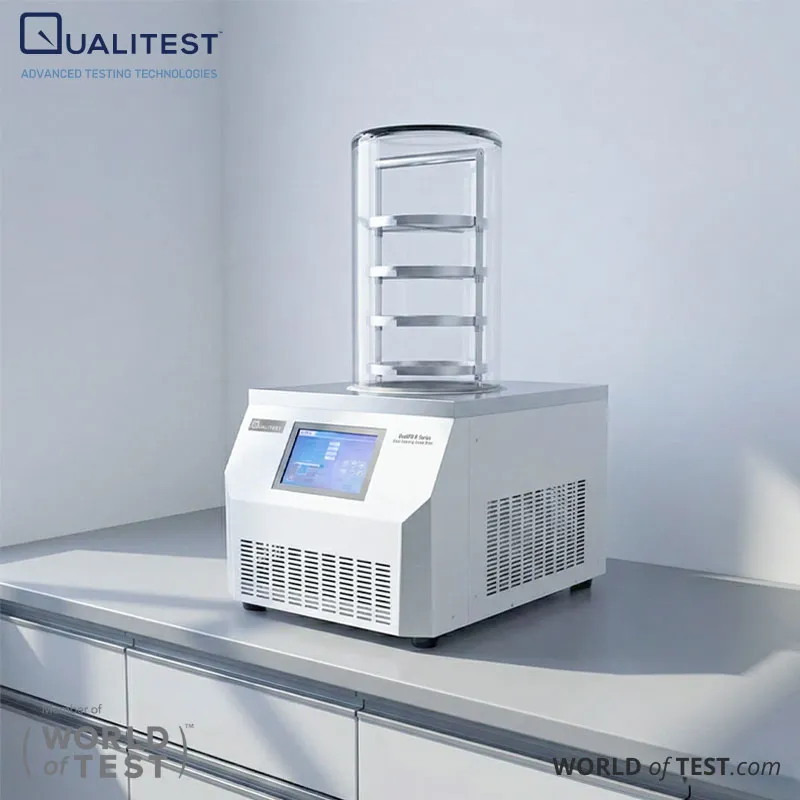
Basic Benchtop Freeze Dryer – QualiFD™ B Series
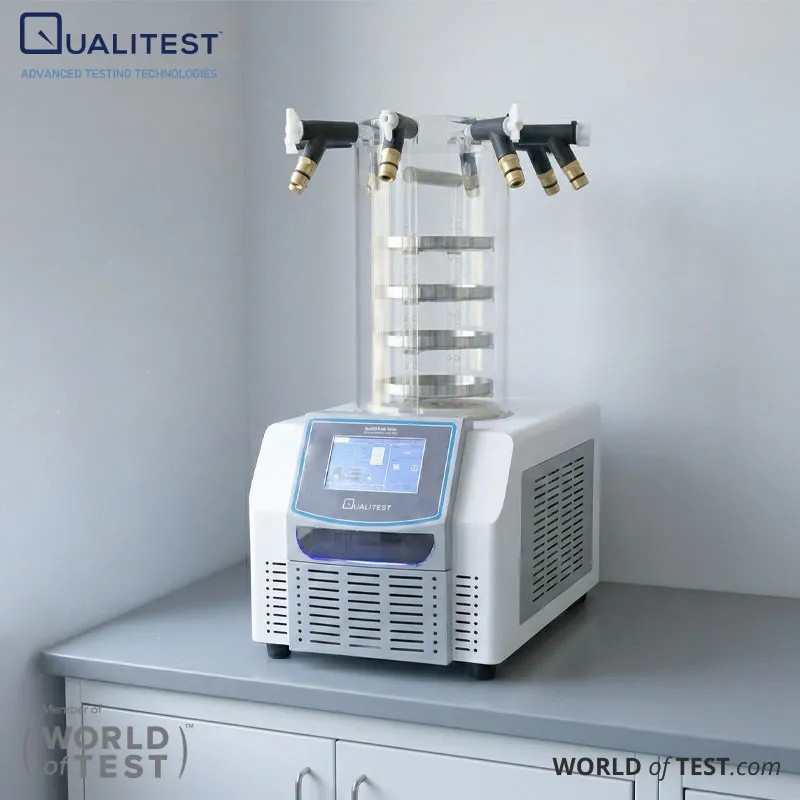
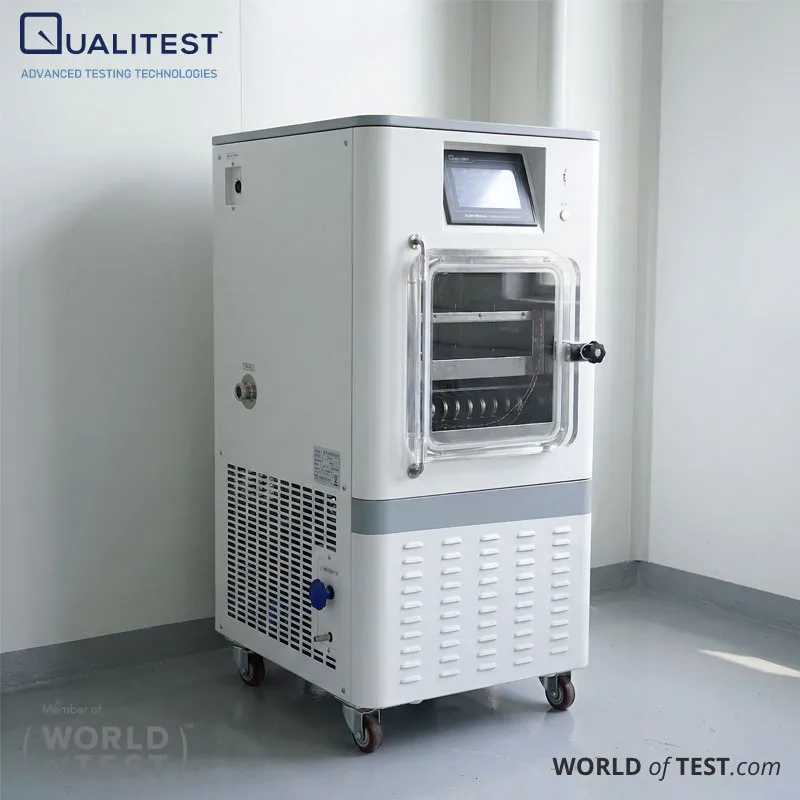
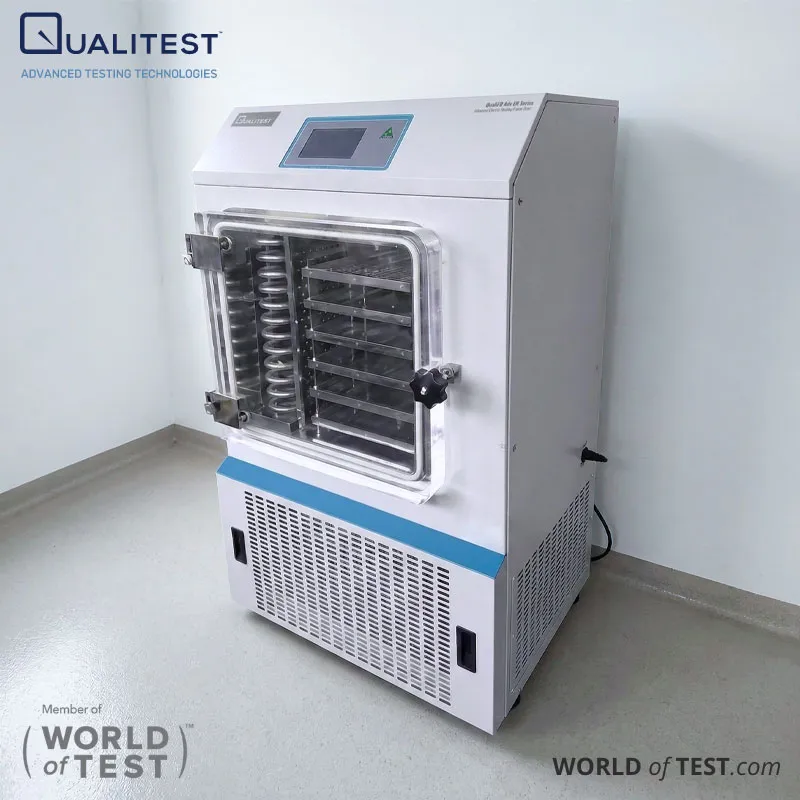
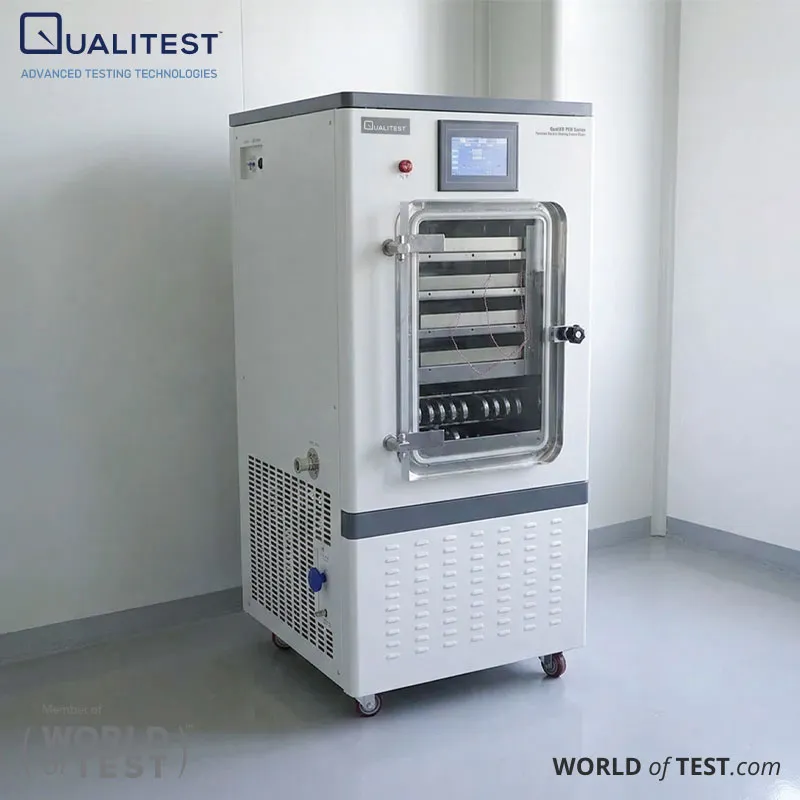
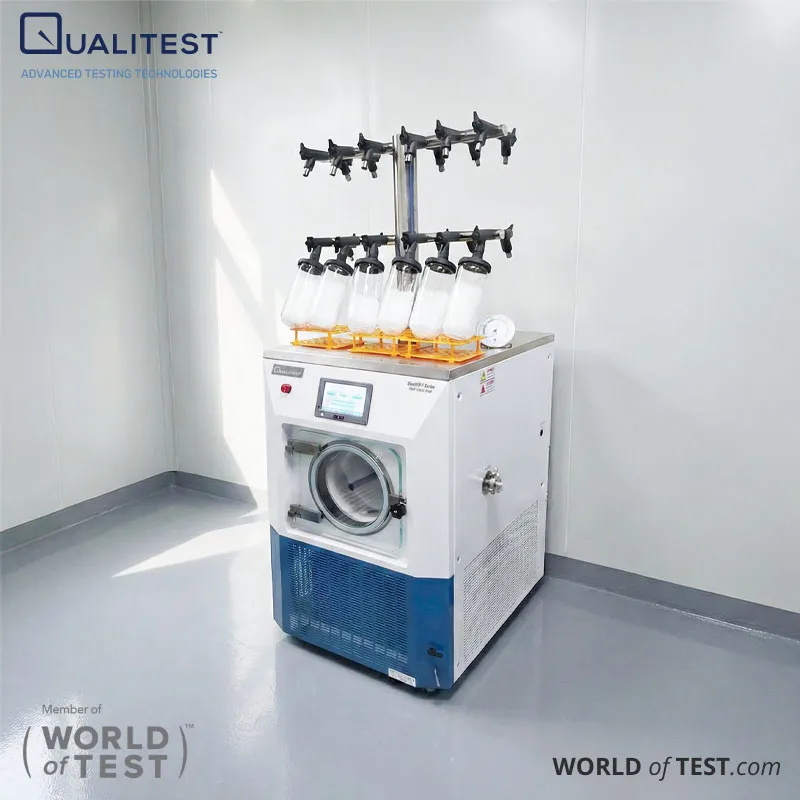
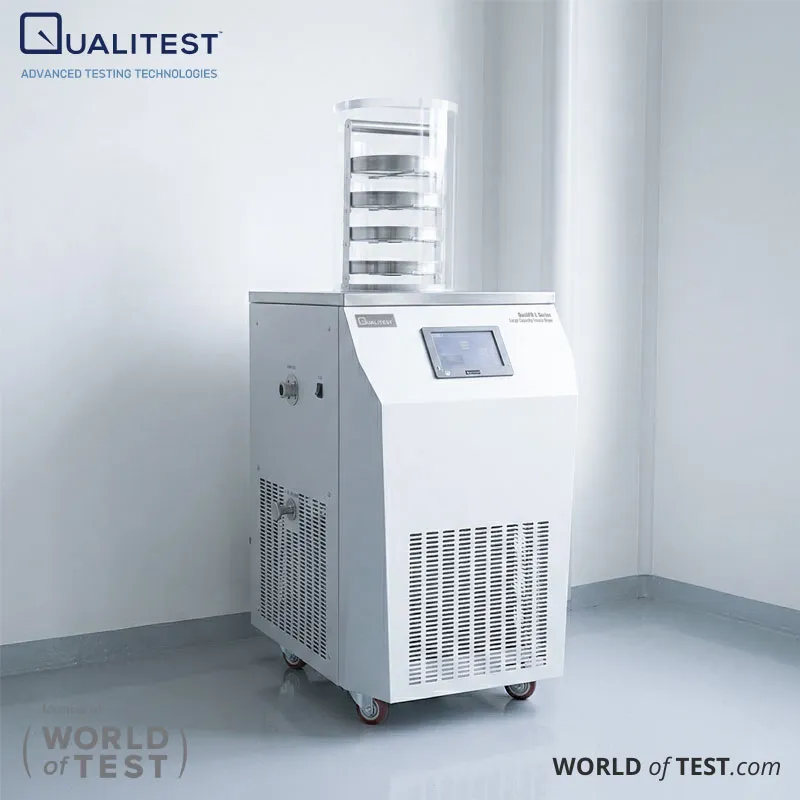
The QualiFD™ B Series Freeze Dryer provides laboratories with a reliable solution for removing solvents from frozen samples under vacuum, ensuring stable, dry storage. Designed as a benchtop system, this entry-level Freeze Dryer Machine is ideal for routine lyophilization in medicine, pharmaceuticals, research, chemistry, and food science applications.
Its compact, all-in-one design fits standard lab benches and simplifies setup. The cold trap and work surfaces are made from stainless steel for easy cleaning and daily lab operations. Materials in contact with samples are inert, supporting GLP-compliant workflows.
A built-in pre-freeze function allows standard runs without requiring an external low-temperature freezer for many sample types. The integrated touchscreen provides real-time monitoring and graphical display of key process parameters, making control intuitive and precise.
This benchtop Freeze Dryer Machine is tailored for routine lab drying tasks, offering versatile configurations for bulk samples, vials, or ampoules. Its straightforward design and practical controls make it an efficient choice for laboratories handling pharmaceuticals, biological research, chemistry, or food sample processing.
Applications of QualiFD™ B Series Benchtop Freeze Dryer
Pharmaceutical R&D Sample Preservation: Freeze-drying ensures extended stability for formulations and intermediates prone to degradation in solution. Laboratories can process small batches for screening, retain dried samples for retesting, and support transfer studies. Integrated vacuum and temperature monitoring curves allow consistent, repeatable process workflows.
Biological Research and Biomaterials: Proteins, enzymes, cultures, and research reagents benefit from low-moisture storage. Freeze-drying reduces water activity, maintaining sample quality during storage and shipment. Ampoule and tube configurations allow safe preservation of microorganisms, including bacteria and fungi.
Chemical Labs and Specialty Materials: Chemical solutions, suspensions, and porous materials can be freeze-dried when low-temperature processing is critical. Manifold setups support vials or bottles externally connected for drying and can integrate with concentration workflows, enabling simultaneous processing of multiple samples.
Food and Ingredient Development: Freeze-drying is ideal for pilot-scale R&D of ingredients, flavors, and sensitive food components. Low-temperature drying preserves texture, aroma, and volatile compounds. The benchtop design allows early-stage product development teams to conduct trials without needing full-scale production systems.
Standards for QualiFD™ B Series Benchtop Freeze Dryer
- ISO 13408-3: Guidelines for aseptic processing of healthcare products, including lyophilization, ensuring controlled and compliant workflows.
- ASTM E3250-21: Best practices for monitoring product temperature and equipment pressure during pharmaceutical freeze-drying processes.
- 21 CFR Part 11: Compliance for electronic records and electronic signatures, supporting audit trails and secure data management.
Basic Benchtop Freeze Dryer – QualiFD™ B Series Key Features
- Compact Benchtop Design: All-in-one build minimizes external connections and allows fast setup for routine laboratory freeze-drying.
- Pre-Freeze Capability: Large cold-trap opening and built-in sample pre-freezing streamline workflows for a variety of lab applications.
- Durable Stainless Steel Surfaces: Cold trap and work area crafted from stainless steel for easy cleaning and reliable daily laboratory use.
| All-stainless venting valve design aimed at safety, corrosion resistance, and leak risk reduction. |  |
 |
|
|
 |
Theory and Method – Benchtop Freeze Dryer
Freeze drying, or lyophilization, removes solvents from frozen samples through vacuum and controlled heat. The process involves three key stages: freezing, primary drying where ice sublimates, and secondary drying to reduce bound moisture to the desired residual level.
Cold trap temperature and chamber pressure control the sublimation rate and vapor capture efficiency. Monitoring product temperature ensures samples stay below critical limits during primary drying. The cycle concludes by returning the chamber to atmospheric pressure for safe unloading and sealing of dried samples.
Basic Benchtop Freeze Dryer – QualiFD™ B Series Technical Specification
Model configurations

- QualiFD™ B1 (Standard): tray drying for bulk liquids, pastes, and solids.
- QualiFD™ B2 (Top-press): tray drying plus vial drying support; pressure-cap sealing under vacuum for storage workflows.
- QualiFD™ B3 (Standard + Manifolds): tray drying plus external hanging bottle attachment for vials or wide-mouth bottles.
- QualiFD™ B4 (Top-press + Manifolds): combines top-press workflow with manifold capability.
- QualiFD™ B5 (Ampoule tube): 24 ampoule tube interfaces for microorganism preservation workflows.
| Specification | QualiFD™ B1 | QualiFD™ B2 | QualiFD™ B3 | QualiFD™ B4 | QualiFD™ B5 |
|---|---|---|---|---|---|
| Configuration | Standard | Top-press | Standard + multiple manifolds | Top-press + multiple manifolds | Ampoule tube |
| Freeze drying area | 0.12 m² | 0.08 m² | 0.12 m² | 0.08 m² | — |
| Cold trap temperature | ≤ -60 °C; options ≤ -80 °C; ≤ -110 °C (no-load) | ||||
| Ultimate vacuum | < 5 Pa (no-load) | ||||
| Water capture capacity | 3–4 kg/24 h | ||||
| Tray / shelves | Ø200 mm, 4 layers (opt. 6) | Ø180 mm, 3 layers | Ø200 mm, 4 layers (opt. 6) | Ø180 mm, 3 layers | — |
| Overall power | 970 W | ||||
| Main unit weight | 41 kg | ||||
| Dimensions (W×D×H) | 615×450×370 mm + (430 drying chamber) | 615×450×370 mm + (440) | |||
| Loadable materials (10 mm thickness references) | 1.2 L/kg | 0.8 L/kg | 1.2 L/kg | 0.8 L/kg | — |
| Vial capacity (tray-type reference) | Φ12 mm: 492 Φ16 mm: 279 Φ22 mm: 147 |
Φ12 mm: 492 Φ16 mm: 279 Φ22 mm: 147 |
Via external manifold setup (capacity depends on container set) | Via external manifold setup (capacity depends on container set) | Ampoule tube interfaces: 24 |
Operating Guide
- Power On: Open the system menu and access the operation screen. Switch the Compressor to On.
- Load Samples: After pre-freezing, place the material into the drying chamber. Turn on the Vacuum Pump and Vacuum Gauge.
- Unloading Samples: Before removing dried samples, fully open the inlet/exhaust (venting) valve and wait for the chamber and cold trap to return to atmospheric pressure. During shutdown, re-inflate first, then switch off the vacuum pump to prevent oil backflow.
- Defrosting: Press Defrost. The process takes approximately 30 minutes. Keep the drain valve open and place a container underneath to collect water.
Description
Basic Benchtop Freeze Dryer – QualiFD™ B Series
The QualiFD™ B Series Freeze Dryer provides laboratories with a reliable solution for removing solvents from frozen samples under vacuum, ensuring stable, dry storage. Designed as a benchtop system, this entry-level Freeze Dryer Machine is ideal for routine lyophilization in medicine, pharmaceuticals, research, chemistry, and food science applications.
Its compact, all-in-one design fits standard lab benches and simplifies setup. The cold trap and work surfaces are made from stainless steel for easy cleaning and daily lab operations. Materials in contact with samples are inert, supporting GLP-compliant workflows.
A built-in pre-freeze function allows standard runs without requiring an external low-temperature freezer for many sample types. The integrated touchscreen provides real-time monitoring and graphical display of key process parameters, making control intuitive and precise.
This benchtop Freeze Dryer Machine is tailored for routine lab drying tasks, offering versatile configurations for bulk samples, vials, or ampoules. Its straightforward design and practical controls make it an efficient choice for laboratories handling pharmaceuticals, biological research, chemistry, or food sample processing.
Applications of QualiFD™ B Series Benchtop Freeze Dryer
Pharmaceutical R&D Sample Preservation: Freeze-drying ensures extended stability for formulations and intermediates prone to degradation in solution. Laboratories can process small batches for screening, retain dried samples for retesting, and support transfer studies. Integrated vacuum and temperature monitoring curves allow consistent, repeatable process workflows.
Biological Research and Biomaterials: Proteins, enzymes, cultures, and research reagents benefit from low-moisture storage. Freeze-drying reduces water activity, maintaining sample quality during storage and shipment. Ampoule and tube configurations allow safe preservation of microorganisms, including bacteria and fungi.
Chemical Labs and Specialty Materials: Chemical solutions, suspensions, and porous materials can be freeze-dried when low-temperature processing is critical. Manifold setups support vials or bottles externally connected for drying and can integrate with concentration workflows, enabling simultaneous processing of multiple samples.
Food and Ingredient Development: Freeze-drying is ideal for pilot-scale R&D of ingredients, flavors, and sensitive food components. Low-temperature drying preserves texture, aroma, and volatile compounds. The benchtop design allows early-stage product development teams to conduct trials without needing full-scale production systems.
Standards for QualiFD™ B Series Benchtop Freeze Dryer
- ISO 13408-3: Guidelines for aseptic processing of healthcare products, including lyophilization, ensuring controlled and compliant workflows.
- ASTM E3250-21: Best practices for monitoring product temperature and equipment pressure during pharmaceutical freeze-drying processes.
- 21 CFR Part 11: Compliance for electronic records and electronic signatures, supporting audit trails and secure data management.
Basic Benchtop Freeze Dryer – QualiFD™ B Series Key Features
- Compact Benchtop Design: All-in-one build minimizes external connections and allows fast setup for routine laboratory freeze-drying.
- Pre-Freeze Capability: Large cold-trap opening and built-in sample pre-freezing streamline workflows for a variety of lab applications.
- Durable Stainless Steel Surfaces: Cold trap and work area crafted from stainless steel for easy cleaning and reliable daily laboratory use.
| All-stainless venting valve design aimed at safety, corrosion resistance, and leak risk reduction. | |
|
|
|
|
Theory and Method – Benchtop Freeze Dryer
Freeze drying, or lyophilization, removes solvents from frozen samples through vacuum and controlled heat. The process involves three key stages: freezing, primary drying where ice sublimates, and secondary drying to reduce bound moisture to the desired residual level.
Cold trap temperature and chamber pressure control the sublimation rate and vapor capture efficiency. Monitoring product temperature ensures samples stay below critical limits during primary drying. The cycle concludes by returning the chamber to atmospheric pressure for safe unloading and sealing of dried samples.
Basic Benchtop Freeze Dryer – QualiFD™ B Series Technical Specification
Model configurations
- QualiFD™ B1 (Standard): tray drying for bulk liquids, pastes, and solids.
- QualiFD™ B2 (Top-press): tray drying plus vial drying support; pressure-cap sealing under vacuum for storage workflows.
- QualiFD™ B3 (Standard + Manifolds): tray drying plus external hanging bottle attachment for vials or wide-mouth bottles.
- QualiFD™ B4 (Top-press + Manifolds): combines top-press workflow with manifold capability.
- QualiFD™ B5 (Ampoule tube): 24 ampoule tube interfaces for microorganism preservation workflows.
| Specification | QualiFD™ B1 | QualiFD™ B2 | QualiFD™ B3 | QualiFD™ B4 | QualiFD™ B5 |
|---|---|---|---|---|---|
| Configuration | Standard | Top-press | Standard + multiple manifolds | Top-press + multiple manifolds | Ampoule tube |
| Freeze drying area | 0.12 m² | 0.08 m² | 0.12 m² | 0.08 m² | — |
| Cold trap temperature | ≤ -60 °C; options ≤ -80 °C; ≤ -110 °C (no-load) | ||||
| Ultimate vacuum | < 5 Pa (no-load) | ||||
| Water capture capacity | 3–4 kg/24 h | ||||
| Tray / shelves | Ø200 mm, 4 layers (opt. 6) | Ø180 mm, 3 layers | Ø200 mm, 4 layers (opt. 6) | Ø180 mm, 3 layers | — |
| Overall power | 970 W | ||||
| Main unit weight | 41 kg | ||||
| Dimensions (W×D×H) | 615×450×370 mm + (430 drying chamber) | 615×450×370 mm + (440) | |||
| Loadable materials (10 mm thickness references) | 1.2 L/kg | 0.8 L/kg | 1.2 L/kg | 0.8 L/kg | — |
| Vial capacity (tray-type reference) | Φ12 mm: 492 Φ16 mm: 279 Φ22 mm: 147 |
Φ12 mm: 492 Φ16 mm: 279 Φ22 mm: 147 |
Via external manifold setup (capacity depends on container set) | Via external manifold setup (capacity depends on container set) | Ampoule tube interfaces: 24 |
Operating Guide
- Power On: Open the system menu and access the operation screen. Switch the Compressor to On.
- Load Samples: After pre-freezing, place the material into the drying chamber. Turn on the Vacuum Pump and Vacuum Gauge.
- Unloading Samples: Before removing dried samples, fully open the inlet/exhaust (venting) valve and wait for the chamber and cold trap to return to atmospheric pressure. During shutdown, re-inflate first, then switch off the vacuum pump to prevent oil backflow.
- Defrosting: Press Defrost. The process takes approximately 30 minutes. Keep the drain valve open and place a container underneath to collect water.