
Original: $100.00
-65%$100.00
$35.00The Story
Basic Mobility Freeze Dryer – QualiFD™ M Series
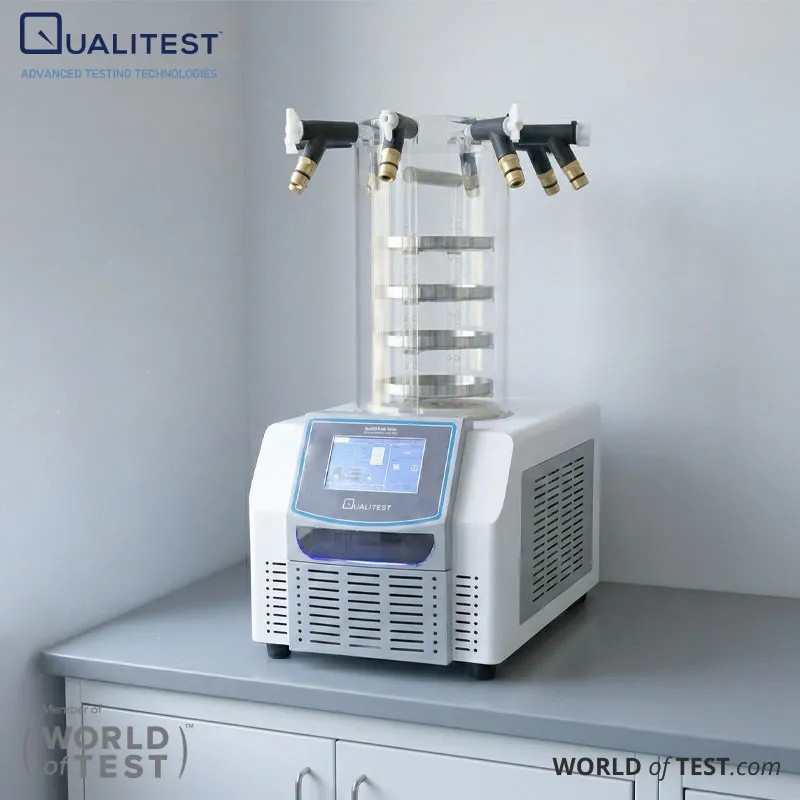
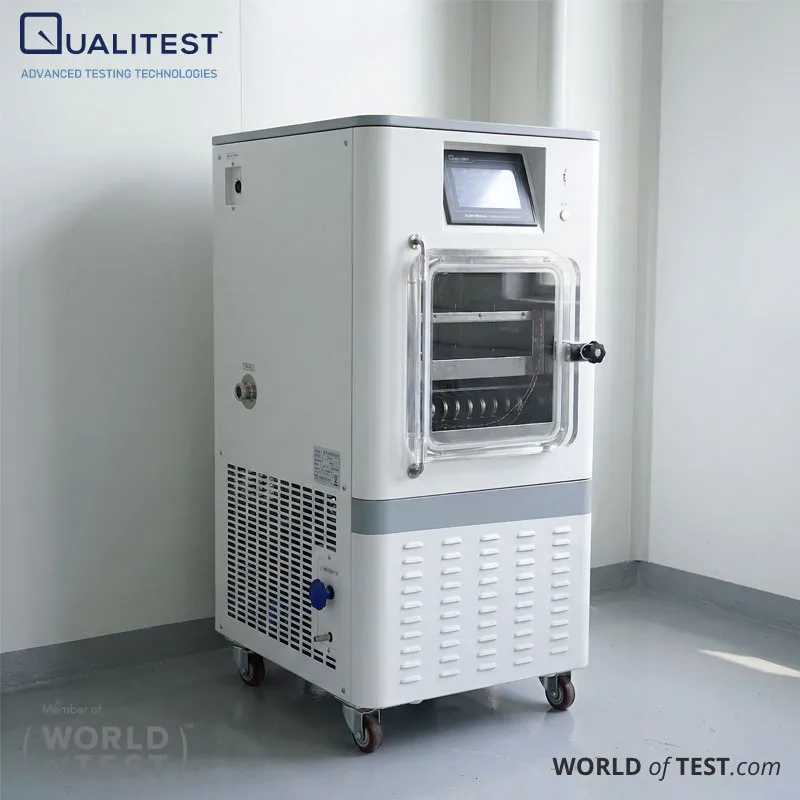
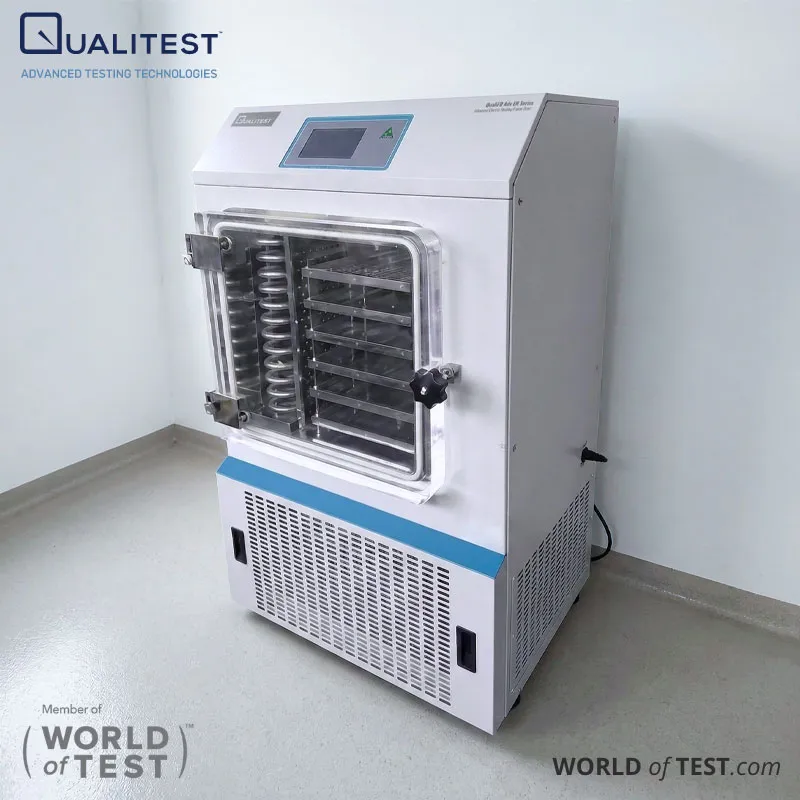
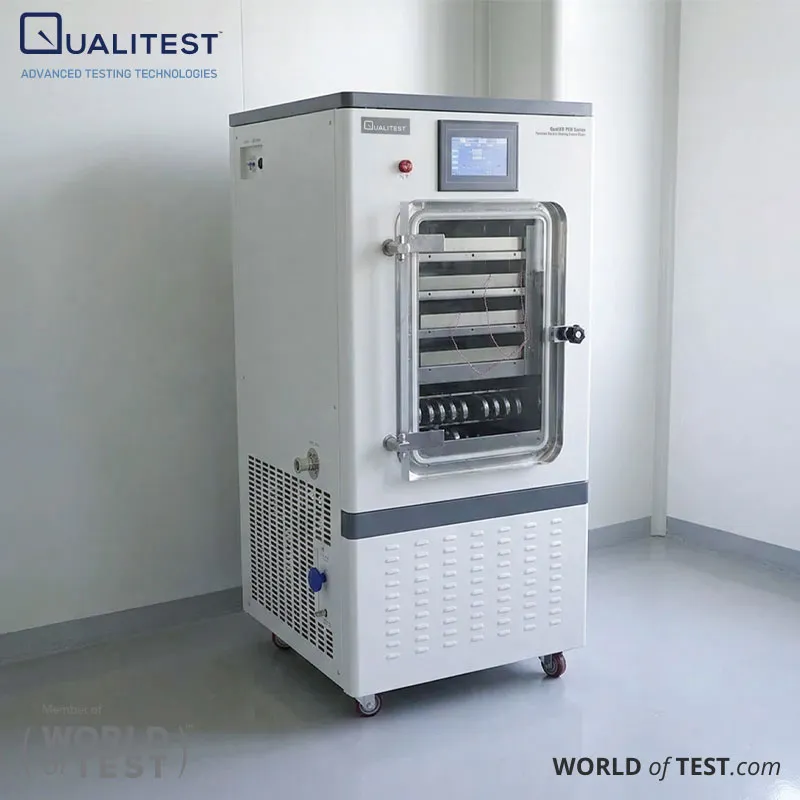
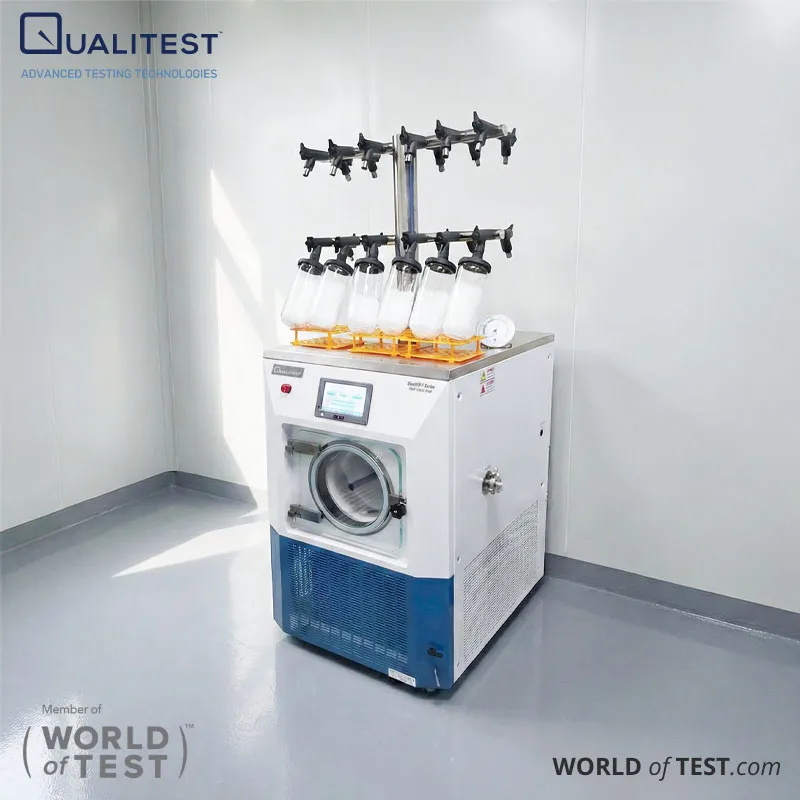
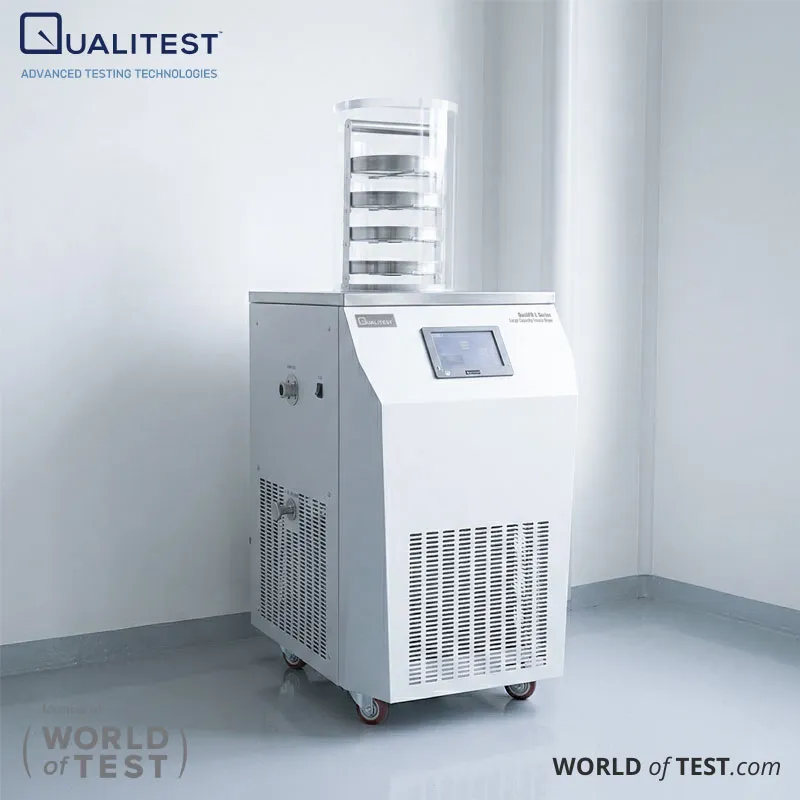
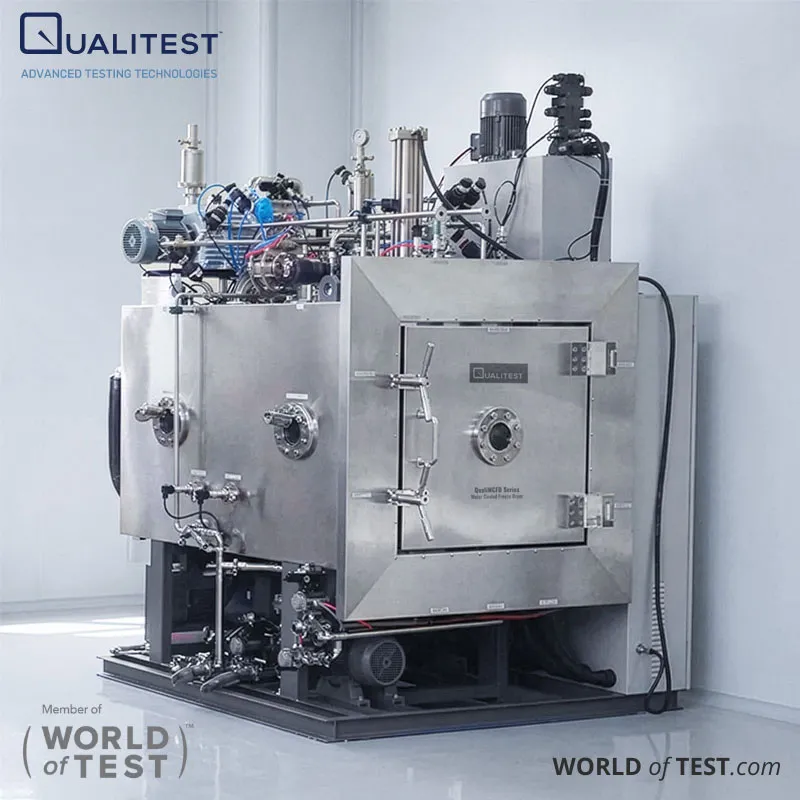
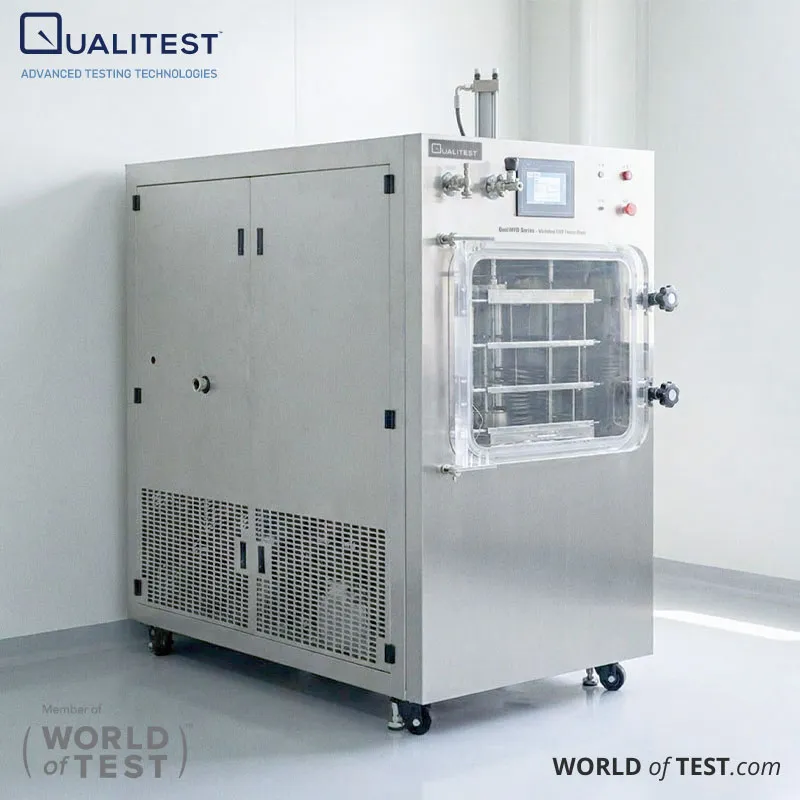
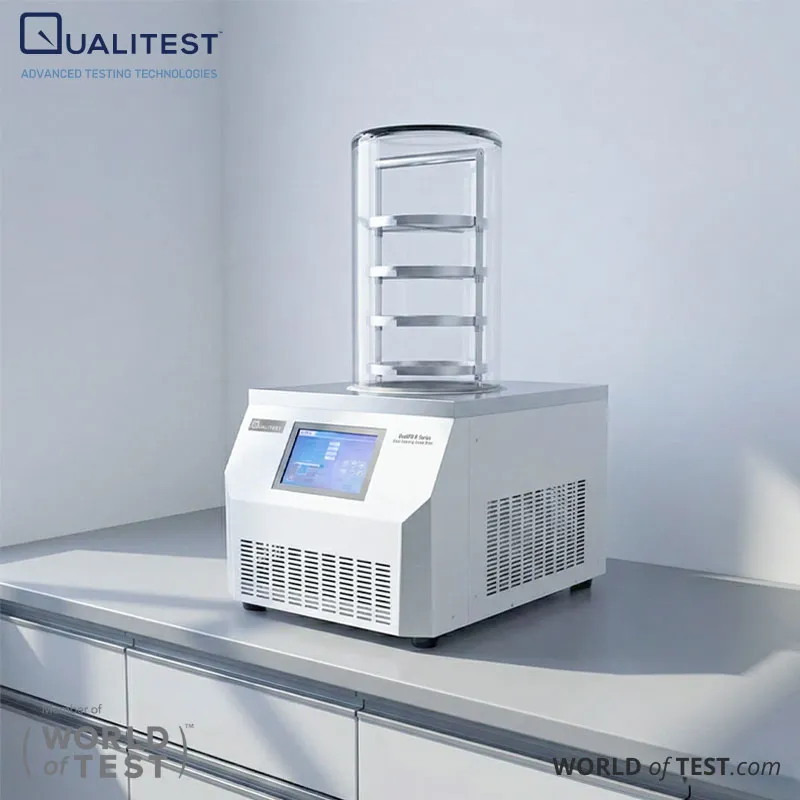
The QualiFD™ M Series Basic Mobility Freeze Dryer is a floor-standing Freeze Dryer Machine designed for flexible lab use and routine lyophilization. Built with integrated caster wheels, the system moves easily between benches, pilot areas, and shared laboratory spaces without interrupting established workflows. It supports consistent drying performance across applications in medicine, pharmaceuticals, biological research, chemistry, and food processing where controlled handling and repeatability are essential.
This mobility-focused freeze dryer features a compact, single-unit structure designed for space efficiency, reduced leakage risk, and straightforward operation. The cold trap and work surface are constructed from stainless steel, supporting corrosion resistance and simplified cleaning. Product-contact components are inert, aligning with GLP-oriented laboratory requirements.
A wide cold trap opening combined with a pre-freeze function supports daily processing needs without reliance on a separate low-temperature freezer. The integrated touchscreen control system allows real-time monitoring and records key process curves for analysis, documentation, and reporting, helping maintain consistent and traceable results.
Applications
Pharmaceutical and Medical Laboratories:
Freeze drying supports extended storage of temperature-sensitive samples and intermediates while maintaining product integrity. The top-press configuration allows vials to be dried and sealed under vacuum for secure storage. Continuous monitoring of vacuum levels, cold trap temperature, and product temperature curves helps maintain process stability and supports consistent method development.
Biology and Microbiology Research:
Lyophilization is widely used for preserving enzymes, biological reagents, and other sensitive materials that degrade in liquid form. The ampoule-tube configuration is suitable for preserving microorganisms such as bacteria and fungi. A mobile base allows easy repositioning within shared lab environments, keeping the unit stable during operation while improving workflow flexibility.
Chemistry and Specialty Materials:
Freeze drying is applied to solutions, suspensions, and porous materials where low-temperature solvent removal is required. Manifold configurations allow connection of external bottles or vials and can integrate with concentration workflows when needed. Stainless steel construction supports routine cleaning and compatibility with commonly used laboratory solvents.
Food and Ingredient Development:
In food R&D, freeze drying is used for sensitive ingredients where heat-based drying may alter texture or aroma. The standard tray configuration supports small-batch processing of liquids, semi-solids, and solids for pilot-scale trials. Mobility enables teams to use the system across multiple applications without the need for a fixed installation space.
Standards
ISO 13408-3:
Defines requirements and guidance for lyophilization within aseptic processing of healthcare products. It focuses on maintaining sterility, controlled environments, and validated processes during freeze drying operations.
ASTM E3250:
Covers best practices for measuring product temperature and equipment pressure in pharmaceutical freeze drying. It outlines instrumentation approaches that support accurate data collection and reliable process control.
IEC 61010-1:
Specifies safety requirements for electrical equipment used in measurement, control, and laboratory environments. It addresses protection against electrical hazards and supports safe operation of laboratory freeze drying systems.
Basic Mobility Freeze Dryer – QualiFD™ M Series Key Features
- Mobility-focused floor design: Equipped with caster wheels for smooth relocation between different lab areas while maintaining stability during operation.
 |
|
|
 |
 |
|
Theory and Method
Freeze drying removes solvent from a frozen product under reduced pressure. The process begins with freezing, followed by primary drying where ice transitions directly into vapor and is captured by the cold trap. Secondary drying then reduces bound moisture to achieve lower residual levels suitable for storage.
Cold trap temperature and chamber pressure play a key role in vapor capture efficiency and overall drying rate. Monitoring product temperature helps ensure the sample remains within formulation limits during primary drying. Once the cycle is complete, the chamber is brought back to atmospheric pressure before unloading and final sealing.
Basic Mobility Freeze Dryer – QualiFD™ M Series Technical Specification
Model configurations (QualiFD™ M Series)

- QualiFD™ M1 (Standard): 4–6 stainless trays for bulk materials (liquid, paste, solid).
- QualiFD™ M2 (Top-Press): 3 trays with adjustable spacing; supports vial drying and vacuum stoppering after drying.
- QualiFD™ M3 (Standard + Multiple Manifolds): tray drying plus external hanging bottle attachment for vials or wide-mouth bottles; attachment can be removed during use.
- QualiFD™ M4 (Top-Press + Multiple Manifolds): combines top-press vial workflow with manifold capability.
- QualiFD™ M5 (Ampoule Tube): 24 ampoule interfaces for microorganism preservation workflows.
Technical parameters (full version, all models)
| Specification | QualiFD™ M1 | QualiFD™ M2 | QualiFD™ M3 | QualiFD™ M4 | QualiFD™ M5 |
|---|---|---|---|---|---|
| Configuration | Standard | Top-press | Standard + multiple manifolds | Top-press + multiple manifolds | Ampoule tube |
| Freeze drying area | 0.12 m² | 0.08 m² | 0.12 m² | 0.08 m² | — |
| Cold trap temperature | ≤ -60 °C; options ≤ -80 °C or ≤ -110 °C (no-load) | ||||
| Ultimate vacuum | < 5 Pa (no-load) | ||||
| Water capture capacity | 3–4 kg/24 h | ||||
| Tray / shelves | Ø200 mm, 4 layers (optional 6) | Ø180 mm, 3 layers | Ø200 mm, 4 layers (optional 6) | Ø180 mm, 3 layers | — |
| Overall power | 970 W | ||||
| Main unit weight | 62 kg | ||||
| Dimensions (W×D×H) | 580×500×720 mm + (430 drying chamber) | 580×500×720 mm + (440) | |||
| Loadable materials (10 mm thickness reference) | 1.2 L | 0.8 L | 1.2 L | 0.8 L | — |
| Vial capacity (tray reference) | Φ 12 mm: 492; Φ16 mm: 279; Φ22 mm: 147 | Φ 12 mm: 492; Φ16 mm: 279; Φ22 mm: 147 | — | — | Ampoule interfaces: 24 |
Description
Basic Mobility Freeze Dryer – QualiFD™ M Series
The QualiFD™ M Series Basic Mobility Freeze Dryer is a floor-standing Freeze Dryer Machine designed for flexible lab use and routine lyophilization. Built with integrated caster wheels, the system moves easily between benches, pilot areas, and shared laboratory spaces without interrupting established workflows. It supports consistent drying performance across applications in medicine, pharmaceuticals, biological research, chemistry, and food processing where controlled handling and repeatability are essential.
This mobility-focused freeze dryer features a compact, single-unit structure designed for space efficiency, reduced leakage risk, and straightforward operation. The cold trap and work surface are constructed from stainless steel, supporting corrosion resistance and simplified cleaning. Product-contact components are inert, aligning with GLP-oriented laboratory requirements.
A wide cold trap opening combined with a pre-freeze function supports daily processing needs without reliance on a separate low-temperature freezer. The integrated touchscreen control system allows real-time monitoring and records key process curves for analysis, documentation, and reporting, helping maintain consistent and traceable results.
Applications
Pharmaceutical and Medical Laboratories:
Freeze drying supports extended storage of temperature-sensitive samples and intermediates while maintaining product integrity. The top-press configuration allows vials to be dried and sealed under vacuum for secure storage. Continuous monitoring of vacuum levels, cold trap temperature, and product temperature curves helps maintain process stability and supports consistent method development.
Biology and Microbiology Research:
Lyophilization is widely used for preserving enzymes, biological reagents, and other sensitive materials that degrade in liquid form. The ampoule-tube configuration is suitable for preserving microorganisms such as bacteria and fungi. A mobile base allows easy repositioning within shared lab environments, keeping the unit stable during operation while improving workflow flexibility.
Chemistry and Specialty Materials:
Freeze drying is applied to solutions, suspensions, and porous materials where low-temperature solvent removal is required. Manifold configurations allow connection of external bottles or vials and can integrate with concentration workflows when needed. Stainless steel construction supports routine cleaning and compatibility with commonly used laboratory solvents.
Food and Ingredient Development:
In food R&D, freeze drying is used for sensitive ingredients where heat-based drying may alter texture or aroma. The standard tray configuration supports small-batch processing of liquids, semi-solids, and solids for pilot-scale trials. Mobility enables teams to use the system across multiple applications without the need for a fixed installation space.
Standards
ISO 13408-3:
Defines requirements and guidance for lyophilization within aseptic processing of healthcare products. It focuses on maintaining sterility, controlled environments, and validated processes during freeze drying operations.
ASTM E3250:
Covers best practices for measuring product temperature and equipment pressure in pharmaceutical freeze drying. It outlines instrumentation approaches that support accurate data collection and reliable process control.
IEC 61010-1:
Specifies safety requirements for electrical equipment used in measurement, control, and laboratory environments. It addresses protection against electrical hazards and supports safe operation of laboratory freeze drying systems.
Basic Mobility Freeze Dryer – QualiFD™ M Series Key Features
- Mobility-focused floor design: Equipped with caster wheels for smooth relocation between different lab areas while maintaining stability during operation.
|
|
|
|
|
|
Theory and Method
Freeze drying removes solvent from a frozen product under reduced pressure. The process begins with freezing, followed by primary drying where ice transitions directly into vapor and is captured by the cold trap. Secondary drying then reduces bound moisture to achieve lower residual levels suitable for storage.
Cold trap temperature and chamber pressure play a key role in vapor capture efficiency and overall drying rate. Monitoring product temperature helps ensure the sample remains within formulation limits during primary drying. Once the cycle is complete, the chamber is brought back to atmospheric pressure before unloading and final sealing.
Basic Mobility Freeze Dryer – QualiFD™ M Series Technical Specification
Model configurations (QualiFD™ M Series)
- QualiFD™ M1 (Standard): 4–6 stainless trays for bulk materials (liquid, paste, solid).
- QualiFD™ M2 (Top-Press): 3 trays with adjustable spacing; supports vial drying and vacuum stoppering after drying.
- QualiFD™ M3 (Standard + Multiple Manifolds): tray drying plus external hanging bottle attachment for vials or wide-mouth bottles; attachment can be removed during use.
- QualiFD™ M4 (Top-Press + Multiple Manifolds): combines top-press vial workflow with manifold capability.
- QualiFD™ M5 (Ampoule Tube): 24 ampoule interfaces for microorganism preservation workflows.
Technical parameters (full version, all models)
| Specification | QualiFD™ M1 | QualiFD™ M2 | QualiFD™ M3 | QualiFD™ M4 | QualiFD™ M5 |
|---|---|---|---|---|---|
| Configuration | Standard | Top-press | Standard + multiple manifolds | Top-press + multiple manifolds | Ampoule tube |
| Freeze drying area | 0.12 m² | 0.08 m² | 0.12 m² | 0.08 m² | — |
| Cold trap temperature | ≤ -60 °C; options ≤ -80 °C or ≤ -110 °C (no-load) | ||||
| Ultimate vacuum | < 5 Pa (no-load) | ||||
| Water capture capacity | 3–4 kg/24 h | ||||
| Tray / shelves | Ø200 mm, 4 layers (optional 6) | Ø180 mm, 3 layers | Ø200 mm, 4 layers (optional 6) | Ø180 mm, 3 layers | — |
| Overall power | 970 W | ||||
| Main unit weight | 62 kg | ||||
| Dimensions (W×D×H) | 580×500×720 mm + (430 drying chamber) | 580×500×720 mm + (440) | |||
| Loadable materials (10 mm thickness reference) | 1.2 L | 0.8 L | 1.2 L | 0.8 L | — |
| Vial capacity (tray reference) | Φ 12 mm: 492; Φ16 mm: 279; Φ22 mm: 147 | Φ 12 mm: 492; Φ16 mm: 279; Φ22 mm: 147 | — | — | Ampoule interfaces: 24 |